Contact Information

E-mail: brucefrancismacdonald@gmail.com

Friday, 6 February 2026

Private Harry Black McLane—Died of Illness November 20, 1921

 Harry Black McLane was born in Stillwater, Guysborough County, on October 12, 1893, to Henry Alexander and Martha (McDaniel) McLane. Harry traced his McLane roots to Joseph McLane, a native of Londonderry, Ireland, whose name first appears in Nova Scotian records in 1780. Joseph’s father, John McLane, subsequently immigrated to the colony and settled in Onslow, Colchester County, where he later held the position of schoolmaster in Great Village.

Private Harry Black McLane, 85th Battalion (Nova Scotia Highlanders)

In 1838, one of Joseph’s sons, William Hamilton McLane, left Onslow with his wife Margaret (McCurdy) and family and settled in Stillwater, Guysborough County. Henry Cumminger McLane, born in Onslow on June 1, 1826, was their eighth child and fourth son in a household of 11 children.

On June 12, 1849, Henry C. married Susanna Campbell at St. Marys, Guysborough County. The couple raised 11 children in their Stillwater home. Henry Alexander McLane, their seventh child and third son, married Martha McDaniel, daughter of merchant William and Elizabeth McDaniel, Sherbrooke, in New Glasgow on December 18, 1890.

During the following decade, four children joined the McLane family—Vera Elizabeth (DOB December 29, 1891); Harry (DOB October 12, 1893), Arthur Lorne (DOB December 3, 1894) and Frank Burton “Burt” (DOB November 29, 1897). Another two children—Florence Irene (DOB February 1903) and Murray (DOB July 1905)—were born after the turn of the century.

The outbreak of the First World War in Europe impacted the lives of Henry C. and Martha’s three oldest sons. Burt, the youngest of the trio, enlisted with the 193rd Battalion at Guysborough on April 1, 1916, and served with the 2nd Tunnelling Company and 11th Battalion, Canadian Engineers, in France and Belgium. A detailed summary of Burt’s service is available elsewhere on this blog.

Harry and Arthur, the two oldest McLane boys, enlisted with the 85th Battalion (Nova Scotia Highlanders) at Halifax on October 22, 1915. Arthur’s time in uniform was brief. Upon undergoing a medical examination, he was discharged as “medically unfit” six days later and returned home. Harry, however, met the required physical standards and spent the next year training with the 85th in Nova Scotia.

On October 12, 1916, Harry departed from Halifax aboard SS Olympic and arrived in the United Kingdom one week later. The vessel’s passengers included four Nova Scotia battalions that formed the Nova Scotia Highland Brigade—85th, 185th (Cape Breton Highlanders), 193rd and 219th. The Brigade’s overseas arrival coincided with significant Canadian Corps losses during its September and October 1916 service at the Somme. As a result, two battalions—193rd and 219th—were immediately disbanded and their soldiers transferred to existing units in need of reinforcements.

A draft of the 85th’s soldiers was also reassigned to units already in France. While a sizeable number joined the 42nd Battalion (Royal Highlanders of Canada), Harry was part of a smaller group transferred to the 13th Battalion (Royal Highlanders of Canada) on December 5, 1916. He immediately proceeded to France and joined his new unit in the field four days later.

The 13th and 42nd were two of three infantry units recruited for service by the Royal Highlanders of Canada (RHC), a Montreal militia regiment affiliated with Scotland’s famous Black Watch. As a result, the expression was applied to all three RHC battalions—13th, 42nd and 73rd—throughout their First World War service.

The 13th Battalion occupied reserve positions during the Canadian Corps’ April 9, 1917 attack on Vimy Ridge, France, its soldiers maintaining communication with 3rd Brigade Headquarters and acting as a “report centre” throughout the battle. The following day, personnel “supplied parties to help clean up the battlefield and make roads to enable the artillery to bring up their guns.” Salvage and construction work continued for one week, the battalion finally returning to the front line near Farbus on April 17.

Harry served in the trenches with the 13th throughout the spring and early summer. On August 15, 1917, Canadian units launched their second major offensive of the year—an assault on Hill 70, near Lens, France. On this occasion, the 13th occupied the central position on a three-battalion front when the attack commenced at 0425 hours. Its Companies reached their objectives in less than two hours and consolidated their locations. Shortly afterwards, the second phase of the attack commenced, supporting Canadian units passing through the 3rd Brigade’s line and securing Hill 70 in less than an hour.

The 13th was relieved in the early morning hours of August 17 and retired to billets at Les Brebis. Its Hill 70 losses included one officer killed and seven others wounded, while 34 “other ranks” (OR) were killed and 186 wounded. Harry was among the soldiers evacuated for medical treatment that day, admitted to No. 7 Canadian General Hospital, Étaples, with a gunshot or shrapnel wound to his right knee. The injury appears to have been slight, as he was transferred to No. 6 Convalescent Depot, Cayeux, on August 23.

Harry was discharged from medical care on October 17 and reported to the Canadian Base Depot, Étaples. While awaiting orders to return to the 13th Battalion, he was re-admitted to hospital in late December 1917 for treatment of scabies, a skin rash caused by mites. The affliction was common among soldiers throughout the war, due largely to crowded, damp and unsanitary conditions in the front lines.

Discharged to duty on January 11, 1918, Harry rejoined the 13th in the field six weeks later. In mid-March, he was awarded 14 days’ leave to the United Kingdom, and returned to the 13th’s ranks near Arras, France, on April 3, 1918. Only days earlier—March 21, 1918—German forces had launched Operation Michael, a massive spring offensive targeting a large section of the front line south of Arras, held by British forces. While the Canadian sector was not impacted, all personnel “stood to” throughout the tense two weeks that followed. By April 5, the offensive had lost its momentum and the two sides returned to the stalemate of previous months.

On May 5, Harry was admitted to No. 57 Casualty Clearing Station, where he was initially diagnosed with tonsillitis. Subsequent investigations led to a diagnosis of diphtheria. a highly contagious bacterial infection that was common in the trenches, due to poor sanitation. In early June, Harry was invalided to England for treatment of “debility after diphtheria” and admitted to 2nd Western General Hospital, Manchester.

Harry spent two weeks in hospital before being transferred to a Military Convalescent Hospital at Epsom. On August 2, he was discharged to duty and reported to No. 2 Canadian Corps Depot, Bramshott. At some point during his time in England, Harry met Hilda Gell, born in South Bank, Normanby, on January 5, 1900, daughter of Harry And Elizabeth (While) Gell. Harry and Hilda married sometime during the autumn of 1918, as Harry re-directed his assigned pay to Mrs. Hilda McLane. 35 Normanby Road, South Bank, as of November 1, 1918.

Throughout the winter of 1918-19, Harry suffered bouts of illness. On November 22, 1918, he was admitted to No. 12 Canadian General Hospital with influenza—quite possibly the infamous “Spanish flu” that was endemic at the time. Discharged in mid-December, he was admitted to Brighton Grove Military Hospital, Newcastle-on-Tyne, on January 25, 1919, where he remained for one month.

Transferred to the Canadian Special Hospital, Witley, on February 20, Harry was discharged to duty six days later. On May 10, 1919, he proceeded to Rhyl, Ripon, for a series of examinations prior to his return to Canada. Finally, on September 17, Harry left the UK aboard SS Melita. As a member of the 13th Battalion, he was transported to Quebec City, where he was discharged on September 26, two days after his arrival. He then made his way back to Nova Scotia by train and returned home.

At an unknown date, Hilda made her way to Canada and joined Harry in Stillwater. The couple’s first child, Florence Hilda, was born there on November 17, 1919. After spending the winter of 1919-20 in Nova Scotia, Harry and Hilda returned to the United Kingdom aboard the White Star Line ship Canada, arriving in Liverpool on April 28, 1920. They made their way to South Bank, where Harry found work as a “ gas fireman” in a local blast furnace.

At the time of the April 1921 English census, Harry, Hilda and their young daughter were boarding in the home of John Ed Metheringham, 45 Upper Millbank St., South Bank. On June 21, 1921, the couple’s second child, Arthur Lorne, was born. His namesake—Harry’s younger brother—had tragically drowned in Stillwater on August 2, 1917.

Harry’s health problems continued after his return to the United Kingdom. He passed away in South Bank on November 20, 1921, and was laid to rest in Eston Cemetery, Eston, Middlesbrough, UK. Canadian military authorities agreed that his death was “due to service” and issued a Memorial Cross to his widow Hilda and mother Martha.

Martha (McDaniel) McLane passed away at age 64 in Stillwater on April 21, 1927. Her husband Henry A. died there on January 28, 1949, at age 83 and was laid to rest in Riverside Cemetery, Sherbrooke, beside his wife.

McLane Family Headstone, Riverside Cemetery, Sherbrooke, NS

Several years after her husband’s death, Hilda McLane re-married and raised a family of three children with her second husband. She passed away in Middlesbrough, UK, on October 21, 1959. Harry and Hilda’s daughter Florence married George Brooks, a native of Cleveland, Yorkshire, in July 1948 and passed away in July 1992. No further information is available on her life or family.

Harry and Hilda’s son Arthur married Sheila Pursey and raised a family of five children, three of whom died in infancy. Arthur passed away in London, UK, in the late 1990s. Arthur and Sheila’s son Peter, born on September 24, 1959, married and resided in Eston, where he had his wife raised a family of three daughters. Peter passed away on October 8, 1994. His daughters currently reside in the United Kingdom. 

Friday, 5 April 2024

Private Ernest Clare Simpson—Died of Illness February 9, 1925

 Ernest Clare Simpson was born in Middle Manchester, Guysborough County, on July 9, 1896, the youngest of William Gladstone and Emma Alma (Torey) Simpson’s 14 children. Both of his parents were Guysborough County natives. William was born in Manchester on April 17, 1845, the son of Thomas and Elizabeth Ann (Horton)  Simpson, while Emma was born in Guysborough Intervale on October 18, 1854, the daughter of John and Elizabeth (Brimer) Torey. The couple were married at Manchester on March 13, 1873.

Private Ernest Clare Simpson

William and Emma raised a family of 14 children—daughters Iona Gertrude (DOB August 16, 1874); Sarah Alice (DOB August 27, 1876); Florence Augusta (DOB March 5, 1879); Annie Laura (DOB October 21, 1884); Cora Beatrice (YOB 1886); Jenny Edith May (DOB September 21, 1890); Winnifred Clyde (DOB October 8, 1893); and sons Milton Simpson (YOB 1877); Harold Edwin (DOB February 18, 1878); Lewis (YOB 1883); William Gladstone (DOB November 30, 1880); Arthur Augustus (DOB July 22, 1882); Gordon Torey (DOB February 21, 1887); and Ernest Clare (DOB July 9, 1896).

1881 and 1891 Canadian census records list William Gladstone Simpson Sr.’s occupations as “farmer” and “carpenter.” By 1911, the family had relocated to Boylston, where William held the office of postmaster. The six oldest Simpson sons were for the most part beyond the median age for military service during the First World War. Ernest’s 1896 birth year, however, made him an ideal candidate.

On May 8, 1918, Ernest was conscripted into service at Halifax, NS, under the terms of the Military Service Act (1917). He immediately reported to Camp Aldershot for military training. While there, he was hospitalized with measles, a common camp affliction, in mid-June. Discharged to duty in early July, he departed for overseas on August 2, 1918.

Pte. Ernest Clare Simpson (left) and an unknown soldier

Three weeks after arriving in the United Kingdom, Ernest was “taken on strength” by the 17th Reserve Battalion. Stationed at Camp Bramshott, the 17th provided reinforcements for Nova Scotia’s two front-line infantry units—the 25th (Nova Scotia Rifles) and 85th (Nova Scotia Highlanders) Battalions.


Canadian forces were directly involved in the 100 Days Campaign that commenced at Amiens on August 8, 1918, and brought the war to an end on November 11, 1918. Ernest’s late overseas arrival meant that he was not assigned to a combat unit on the continent during the campaign. Instead, he remained in the United Kingdom throughout the winter of 1918-19.

As active combat units in Europe were sent home first, reinforcement units in the United Kingdom were among the last to depart for Canada. While waiting the return home, Ernest was admitted to Ripon Military Hospital on May 15, 1919, with pain in the left side of his chest. The following day, he was diagnosed with pleurisy—inflammation of the tissues that line the outside of the lungs and inner chest wall. A later note on his medical chart contained the following comment: “Left side: considerable effusion [fluid build-up] which has now cleared up…. No TB [tuberculosis] in sputum. Needs time… [to recover in] Special Canadian Hospital.”

On June 25, Ernest was discharged to Epsom Military Convalescent Hospital. Four days later, he was admitted to 16th Canadian General Hospital, Orpington, for treatment of “pleurisy and influenza.” Medical notes also included a reference to the possible presence of tuberculosis.

Ernest was discharged from medical care for a second time on July 4, 1919. Three weeks later, he departed from Glasgow, Scotland, aboard the Saturnia, destined for Montreal, QC. Upon arriving in Canada on August 4, he travelled by train to Halifax, where he was formally discharged from military service on August 13, 1919.

Ernest returned to the Simpson family home in Boylston, where he resided with his parents and two older brothers, William Jr. and Gordon. Following his father’s death on April 23, 1924, Ernest assumed the position of postmaster. Shortly afterward, however, the health issues that initially surfaced during his time overseas returned.

Private Ernest Clare Simpson's headstone, Boylston Baptist Cemetery

On June 9, 1924, Ernest was admitted to the Nova Scotia Sanatorium, Kentville, for treatment of pulmonary tuberculosis. Over the next eight months, his health worsened. Private Ernest Clare Simpson died in the Nova Scotia Sanatorium on February 9, 1925. His remains were transported to Boylston, where he was laid to rest in the Baptist Church Cemetery.

Special thanks to Winn (Manson) Campbell, Meadowvale/Sherbrooke, NS, who provided the images included in this post and brought Ernest's story to my attention. Ernest is the 141st known Guysborough County First World War fatality.

Thursday, 9 March 2023

Private William Andrew "Will" Jordain, Newtown, Guysborough County—A Postscript

 Almost a decade ago, the story of Private William Andrew “Will” Jordain, Newtown, Guysborough County, was posted on this blog. Will was killed on October 30, 1917, during the battle of Passchendaele, Belgium, while serving with the 15th Canadian Machine Gun Company. At that time, the exact circumstances of Will’s death were not known. A family descendant recently came across an old newspaper clipping that provides additional details on what transpired that day.

Pte. William Andrew Jordain

After Will’s tragic death, William Marsden Hughes, a native of Quincy, Massachusetts, wrote a letter to his mother, Mrs. Peter [Carrie Archibald] Jordain.  William enlisted with the 151st Battalion—Will’s initial unit—at Edmonton, Alberta, on December 15, 1915. His overseas service corresponded with Will’s time in uniform. When the 151st Battalion was dissolved after arriving in the United Kingdom, William was also assigned to the 15th Canadian Machine Gun Company.

There is no date on the letter and  no indication as to where it was published. Below is a complete transcript of William’s letter to Carrie:

Mrs. Peter Jordain:

Dear Friend—I suppose by now you have received the sad news of the death of your gallant son, Pte. W. A. Jordain, both official and from his Sergeant Gates.

Before I go any further I shall tell you who I am and how it is I am writing you. My name is Pte. Wm. M. Hughes, No 62098, B Section, 15th Canadian Machine Gun Company, BEF [British Expeditionary Force], France. Your son and I both enlisted in the same battalion, both about the same time. We went into the Machine Gun Section, 151 Battalion, at Sarcee Camp, Alberta. From then right up to the time of his death, we were pals together. He was considerably older than I. He was more like an older brother or a father than a friend. He always helps in things I did not know and by his experience and his help, he saved me many a hard knock.

A year ago this New Years [December 31, 1916 - January 1, 1917], we sat up and watched the old year out and the new in. It was on that night he gave me your address and asked for my mother’s, both agreeing that if anything happened to either of us the one who was left would write and explain. We both prayed that the time would never come. We left England together and were sent both to the same company and to the same section, but different gun crews. He was on No. 1 and I was on No 2. So when we were in the line we were side by side.

Every one in the section had a good word for him. He was our spokesman whenever there was [sic] any complaints about food, billets, etc. It was he who made his crew of four to six men most comfortable in the line and looked after them and saw that they got their share of all the little comforts he could get for his men. It was he who had a young lad in his crew, who was not very strong and when the other men went in with only a tripod for the gun he carried his tripod and strapped to each leg of his tripod he had a full belt box. This meant that he had between 30 and 40 pounds more to carry. He did this so that the young lad who was with him would not have so much to carry.

16th Canadian Machine Gun Company positions, Passchendaele, Oct/Nov 1917

It was on the afternoon of October 29 if I remember correctly, we were waiting to be relieved when the enemy opened up to shell us. A shell hit his position and exploded. He and the officer and his crew of three men never knew what hit them. They went to their Creator without any pain at all. Dear mother, I know that your heart is broken and that it is hard to bear. It will not be long at the most when you will be called Home, and know up yonder he is waiting for you. You have this to be thankful for; he had no pain like many of the fellows have before they go out and that his resting place is marked, not like many that have nothing to show where they lay.

We buried him up on the shell torn ridge along with his officer and crew. At the head of his grave there is a cross bearing his name, number, unit, and the date he died doing his duty like a soldier, trusting God and loved by all his friends, and every one was his friend.

Your sorrow is mine. He was all a fellow would ask for and more in the way of advice that fathers would give. He was through the Battle of Vimy Ridge. Sergeant Gates was sent out [from Passchenadaele] gassed. I will close now, as a friend.

Wm. M. Hughes

The mud-soaked battlefield where Will Jordain was buried endured another 12 months of artillery shelling, obliterating the final resting places of many Passenchendaele fatalities, Will’s grave among them. His name is engraved on the panels of the Menin Gate, Ypres, Belgium, erected after the war to commemorate the deaths of 54,587 British and Commonwealth soldiers killed in the Ypres Salient, and who have no known graves.

Special thanks to Jennifer MacKay, Truro, NS, great-great-niece of William Andrew Jordain, for sharing this news item.

Tuesday, 7 February 2023

Private James Burton Cluney—Died of Illness May 11, 1934

 James Burton Cluney was born in Indian Harbour, Guysborough County, on November 22, 1876, the oldest of Thomas and Sarah Catherine “Kate” (Bennett) Cluney’s eight sons. Thomas Burton traced his Cluney roots to Thomas Cluney, born in Waterford, Ireland, in 1812. A farmer by occupation, Thomas married Mary Bridget McCoy, also a native of Waterford. The couple immigrated to Nova Scotia, where they settled in Indian Harbour, Guysborough County, and raised a family of 12 children.

Pte. James Burton Cluney's headstone, Sherbrooke, NS

Thomas Cluney Jr., one of Thomas and Mary’s sons, was born in Indian Harbour on June 3, 1849, and married Sarah Catherine “Kate” Bennett, daughter of James and Elizabeth (Suyden) Bennett, in a ceremony held in Sherbrooke on October 28, 1875. At the time of the 1881 Canadian census, two young sons, James Burton, age four, and Angus, age two (DOB January 24, 1879), were living in the Cluney household, along with their grandfather, Thomas Cluney Sr., age 69.


Over the next two decades, six more sons joined the Cluney family—William T. (DOB March 4, 1882), Edward (DOB c. 1884), Robert (DOB July 1, 1890), Archibald (DOB December 28, 1892), Charles (DOB June 1, 1894), and Henry (DOB December 1900). While James Burton was still living at home at the time of the 1901 census, he was no longer residing there 10 years later. His exact whereabouts are unknown.

On May 15, 1915, James Burton Cluney married Mary C. (Johnson) Lawson, a 30-year-old widow and daughter of Thomas and Priscilla Johnson, Country Harbour, in a ceremony held in Sherbrooke. At the time of his marriage, James, a farmer by occupation, was living in Indian Harbour, where the couple established residence. Two children soon joined the family—a daughter Janet, date of birth unknown, and a son, Burton Thomas, born in late 1916.

While married with two young children, James was soon caught up in the “war fever” sweeping across the province during the months following his marriage. On January 10, 1917, he enlisted with the 246th Battalion at Halifax, NS. At the time, he gave his occupation as “lumberman” and listed his wife Mary as next of kin.

Perhaps not surprisingly under the circumstances, James gave his year of birth as 1888, making himself 12 years younger. Had authorities known that he was 40 years old at the time, it is doubtful that he would have been accepted into an infantry unit.

Within weeks of James’ enlistment, tragedy struck the Cluney family. On February 17, 1917, his wife Mary died of tuberculosis in Sherbrooke. James arranged for H. Roy Cameron, Sherbrooke, to assume guardianship of his two children, entitling Roy to the separation allowance which James’ deceased wife would have received while he served overseas.

On May 23, 1917, James was transferred to the Nova Scotia Forestry Depot. He departed from Halifax aboard SS Justicia in late June and arrived in the United Kingdom on July 4, 1917. James was immediately posted to the Canadian Forestry Corps’ Base Depot at Sunningdale, where a medical examination determined that his “left foot [was] slightly flat and pronated.” Despite the impediment, he was assigned to duty with No. 59 Company, CFC, on June 28. Two days later, James crossed the English Channel to France with his new unit.

No. 59 Company had been organized and recruited as the Nova Scotia Forestry Depot in 1917. Its personnel had travelled to England aboard SS Justicia in late June and reported to CFC Headquarters, Sunningdale, where they were reorganized into No. 59 Company. The unit landed in France on July 30 and set out for the Bordeaux region, located in southwestern France, adjacent to the Bay of Biscay.

The Company was assigned to duty in No. 12 District, CFC, which became known as the Bordeaux Group. The District, also a new entity, was assigned the task of harvesting mature pine from the “Landes forest.” Located in the historic Gascony region of southwestern France, the area was originally covered with swamps and moors. During the 18th and 19th centuries, pine plantations were established throughout the area, halting erosion and reclaiming the land for human use.

By the early 1900s, the forest covered large areas of Landes and Gironde, two of France’s administrative “departments.” With timber resources dwindling in areas already being exploited, the French government granted the CFC permission to selectively harvest mature trees from the area. No. 12 District established its initial headquarters in Bordeaux, the prefecture (administrative capital) of Gironde. The first CFC units arrived in the area in July 1917 and mill production commenced before month’s end.

On August 4, the CFC’s No. 59 and 60 Companies arrived at Belin-Béliet, Gironde, approximately 60 kilometres south of Bordeaux, and immediately commenced establishing a lumber harvesting and processing operation in the nearby forests. No. 59’s mill commenced operation on September 20, processing logs harvested by its crews since their arrival.

By the end of October, six Canadian portable mills were operating in the District. At that time, its resources consisted of 82 officers, 2,380 “other ranks” and 969 horses. In mid-December, CFC personnel commenced construction of a 50-bed hospital at Facture, where the District’s shipping railhead was located.

In mid-February 1918, No. 12 District headquarters relocated to Facture, approximately 50 kilometres southwest of Bordeaux. The move placed administrative staff much closer to forestry operations, making oversight more convenient. Simultaneously, No. 59 Company—James Burton Cluney’s unit—relocated to Parentis-en-Born, Landes, close to the Bay of Biscay, where it established a new camp and began harvesting the nearby forests.

For more than a year, James served in France without incident. Toward the end of August 1918, he contracted typhoid fever. While medical records indicate that he had recovered from “two previous attacks” of the illness, James became “seriously ill” on this occasion. On September 5, 1918, he was admitted to hospital at Facture, where medical staff determined that he was suffering from “nephritis” (inflammation of kidney tissue).

After two weeks of care and rest, his “condition improved” significantly. On October 10, hospital authorities removed his name from the “seriously ill” list, but he remained under medical care. By late November, James had recovered sufficiently to be invalided to England, where he was admitted to No. 4 Canadian General Hospital, Basingstoke.

A thorough medical examination at admission determined that James was suffering from “venous thrombosis (following typhoid fever).” Shortly after being allowed out of bed in late October, his left leg began to swell below the knee. At the time of his arrival in Basingstoke, medical records state that he looked “60 years of age in appearance, [was] debilitated and thin.” His left leg was “swollen, bluish purple [in] colour. Veins of calf are cord-like, heart slightly enlarged.”

James spent almost three months in hospital before he was well enough to travel. On February 27, 1919, he was transferred to No. 5 Canadian General Hospital, Liverpool, where a note in his medical record indicated that there was “no swelling [of his leg] at present as he stays in bed mostly. Awaiting HS [hospital ship] to Canada.”

On March 11, James departed for Canada aboard the hospital ship Araguaya. He arrived in Halifax 11 days later and was immediately admitted to Camp Hill Hospital, where he was diagnosed with “phlebitis thrombosis [inflammation of a vein near the surface of the skin].” Medical staff indicated that “after a couple mile walk [sic] left leg gets tired and starts to swell. Ordered to wear a bandage elastic web.”

A Medical History of An Invalid form, completed at Camp Hill Hospital in early July, stated that James was suffering from debility, numbness and swelling of the left leg, which was still enlarged and “somewhat bluish,” the veins on its inner side “cord-like.” His heart was “slightly enlarged,” with “every 25 or 30 beats missed.” Medical staff assessed James’ debility as “permanent with possible improvement.”

James was released from hospital on July 12 and discharged from military service six days later, “being no longer physically fit for war service.” He returned to his parents’ Sherbrooke home, where he found work as a labourer in a local sawmill. At the time of the 1921 Canadian census, James and his son Thomas Burton, age four, were living in Sherbrooke with his parents Thomas, age 71, and Sarah, age 63. Also in the home were James’ younger brothers Charlie, age 28, and Sydney, age 20. The fate of James’ daughter Janet is unknown.

On February 1, 1922, James married Ethel Munro, daughter of Joseph and Mary (Hendsbee) Munro, Half Island Cove, in a ceremony that took place in Sherbrooke. The couple established residence in Half Island Cove, where they raised a family of four children—sons Robert Doyle (DOB September 22, 1923) and Murray Forrester (YOB c. 1924), and daughters Hattie Mae (YOB c. 1922) and Winnifred Gertrude “Winnie” (YOB c. 1925).

While the decade following James and Ethel’s marriage passed without incident, two successive tragedies in the mid-1930s led to the family’s dissolution. On May 11, 1934, James Burton Cluney died at Sherbrooke, the result of cerebral thrombosis. Canadian military authorities attributed the cause of death to his overseas military service. James was laid to rest in St. James Anglican Cemetery, Sherbrooke. A little more than a year later, his widow Ethel passed away on June 1, 1935, after a two-year battle with tuberculosis.

Following their parents’ deaths, the Cluney children remained in the Half Island Cove area, where their maternal grandmother, Mary Munro, cared for them. James Burton and Ethel’s eldest child, Robert Doyle Cluney, enlisted with the Canadian Active Service Force at New Glasgow, NS, on April 23, 1942. Robert arrived overseas in late March 1943 and was assigned to the West Nova Scotia Regiment. He departed for Italy with the West Novas in early July 1943 and was killed in action near Ortona, Italy, on December 12, 1943. A detailed story of Robert’s service is available on the Second World War Honour Roll of Guysborough County, Nova Scotia blog.

Photograph of James Burton Cluney's headstone courtesy of Hattie M. Creamer, Canso, NS.

Wednesday, 23 March 2022

Guysborough County's No. 2 Construction Battalion Enlistments, Part 9

This blog post is the ninth and final in a series, summarizing the information available on the life and First World War service of Guysborough County's 28 No. 2 Construction Battalion enlistments. Readers are asked to notify the blog author if there are any errors, or if a reader has additional information on any of the men profiled in these posts.


25, 26 & 27. Privates Angus, James Alexander & William John Tarbot/Talbot:

Brothers Angus, James Alexander and William John Tarbot were born at Sand Point, near Mulgrave, Guysborough County, sons of Edward and Elizabeth “Lizzie” (Benoit/Bennett) Tarbot. The family surname was spelled “Tarbot” in earlier documents, but transitioned to “Talbot” in the years following the First World War.

James Alexander was the oldest of the brothers. According to his death certificate, he was born on April 1 1892. Military service files list William John’s birth date as September 2, 1896, while Angus’s birth date is recorded as May 15, 1897. Census records, however, suggest that Angus was likely born in 1898 or 1899.

At the time of the 1901 Canadian census, the three boys were living with their mother Lizzie in the household of their grandparents, James and Mary J. Tarbot, Mulgrave. On October 22, 1903, Lizzie married Dominick Marshall at Sydney, NS. The couple took up residence on Lingan Road, where Lizzie’s three sons became part of the household. Lizzie gave birth to a daughter Jennie in November 1906. By 1911, James, the oldest of the three brothers, was working as a labourer in the local steel plant, where his step-father Dominick was employed as a foreman.

Following the formation of No. 2 Construction Battalion on July 5, 1916, the three Tarbot brothers were among its earliest enlistments. James and William joined the unit at New Glasgow on July 25, while Angus enlisted the following day. The trio commenced their military service in a barracks on the Pictou waterfront and relocated to Truro with the battalion in September.

Angus, James and William spent the winter of 1916-17 in Truro and departed for overseas aboard SS Southland on March 18, 1917. The brothers arrived in the United Kingdom on April 7. Six weeks later, the brothers crossed the English Channel to France as part of a large detachment of No. 2 Construction personnel who landed on the continent on May 17, 1917.

The men were assigned to the Canadian Forestry Corps’ Jura District, near the Swiss border, where No. 2 Construction personnel worked alongside several CFC Companies, harvesting and processing timber in the mountainous region. The district’s mill specialized in the production of wooden ties for small-gauge railways constructed behind the front lines.

James and William remained in the Jura District for the duration of their overseas service. During that time, both were hospitalized with minor medical issues, but quickly recovered after treatment. In late December 1917, their younger brother Angus was part of a detachment of No. 2 Construction personnel transferred to CFC’s No. 1 District, Alençon, located in the Normandy forests. The group consisted mainly of No. 2 Construction men from the southern United States and Caribbean islands, judged by CFC officers to be susceptible to the Jura District’s colder winters. Angus worked in the Alençon district for the remainder of his time in France.

Following the signing of the November 11, 1918 Armistice, CFC harvesting operations ceased and sawmills processed the remaining harvested logs. CFC personnel then dismantled the mills and lumber camps. No. 2 Construction men were the first to return to the United Kingdom, gathering near Étaples and crossing the English Channel in one group on December 14, 1918.

While Angus and James departed for Canada aboard SS Empress of Britain on January 12, 1919, with the majority of No. 2 Construction men, post-Armistice health issues delayed William’s return until May 18, 1919, when he sailed for home aboard SS Aquitania. Angus and James were discharged from military service at Halifax on February 14, while William was discharged at the same location on June 2, 1919.

The brothers gave their post-war address as 79 Lingan Road, Sydney, the address where their mother and step-father resided. The trio remained in the Sydney area over the next several decades. Their mother Lizzie passed away from lobar pneumonia at 79 Lingan Road, Sydney, on March 24, 1934, and was laid to rest in New Calvary Cemetery, Sydney.

On February 21, 1920, William was working as a “machinist” at the time of his marriage to Violet Walker, daughter of John and Helen (Arsenault) Walker, Montreal, QC. The ceremony took place at St. Alban’s Rectory, Sydney, NS. The marriage was short-lived, as Violet appears to have passed away within the next three years. On March 17, 1924, William, a widower, married Agnes McKinnon, daughter of Roderick and Sarah (McDonald) McKinnon, Glace Bay.

William John Talbot succumbed to pulmonary tuberculosis at 116 Tupper St., Sydney, on February 9, 1945. He had retired from his position as  “steelworker foreman” with Dominion Iron & Steel Corporation the previous year. William was interred in the New Calvary Cemetery, Sydney, NS. There is no record of children from either marriage in available documents.

After returning to Sydney, Angus found work in the local coal mines. On September 26, 1926, he married Rhoda Hanrahan, daughter of Welsey and Rhoda (Morgan) Hanrahan, in a ceremony that took place at 36 Lingan Road, Sydney. Rhoda was a native of Dominion No. 6, while her father Welsey was born in Newfoundland.

Angus worked as a general labourer at the Sydney still plant until 1954. He passed away at Curry’s Lane, Sydney, on December 7, 1955, the result of chronic myocarditis, and was laid to rest in Hardwood Hill Cemetery, Sydney. There is no record of children in available documents.

On March 17, 1924, James Alexander married Margaret LeBlanc, daughter of Charles and Sophie LeBlanc, East Margaree, in a ceremony that took place at 79 Lingan Road, Sydney, NS. The couple had at least one child, Lawrence James, born in 1930. Following his first wife’s passing, James married Josephine Jarvis, daughter of George and Margaret (Mombourquette) Jarvis, Tracadie, in a ceremony that took place in Mulgrave, NS.

James passed away at St, Martha’s Hospital, Antigonish, on October 9, 1970. Widowed at the time of his death, he had been residing in Mulgrave prior to being admitted to hospital following a heart attack. James was laid to rest in New Calvary Cemetery, Sydney. A son William, 113 Tupper St., Sydney, was listed as informant on his death certificate.

28. Private Hartley Fraser Jackson:

Hartley Fraser Jackson was born in Birchtown, near Manchester, Guysborough County, on September 10, 1898. Hartley’s father, William Henry Jackson (DOB February 20, 1865), was also a Manchester native, the son of John and Agnes (Devost) Jackson. On May 19, 1887, William Henry married Sarah Elizabeth Williams, daughter of John and Caroline Williams, Tracadie, in a ceremony that took place in Manchester.

By 1901, the Jackson household consisted of William, Sarah and five children—Caroline “Carrie” (DOB September 15, 1889), Mary E. (DOB March 20, 1890), William Ernest (March 15, 1893), Fannie E. (DOB March 1, 1895) and Hartley. Over the following decade, three more children joined the family—John J. (DOB September 1901), James (DOB May 1906) and Charles A. (DOB June 1907). Sarah Jackson passed away sometime after 1911. On December 22, 1916, William married Maryanne Morris, daughter of Thomas and Sarah Morris, Birchtown, in a ceremony held at Sunnyville, Guysborough County.

Five months prior to his father’s second marriage, Hartley enlisted with No. 2 Construction Battalion at New Glasgow, NS, on July 16, 1916. At the time, he gave his birth date as May 15, 1897, which differs from the information contained in 1901 (September 10, 1898) and 1911 (September 1899) census documents. Hartley identified his older sister Fannie as his next of kin and gave his address as Boylston, Guysborough County.

Hartley was briefly hospitalized with tonsillitis at Truro on March 21, 1917, but was discharged in time to proceed overseas with No. 2 Construction aboard SS Southland one week later. The unit disembarked at Liverpool, United Kingdom, on April 7 and traveled by train to a military camp at Seaford, England.

On May 17, 1917, a detachment of approximately 500 No. 2 Construction personnel crossed the English Channel to France, in the company of 11 officers. Upon disembarking at Le Havre, the group made its way to the Canadian Forestry Corps’ Jura District, near the Swiss border, where the men commenced work alongside several CFC Companies, harvesting and processing timber in the mountainous region.

On November 13, 1917, Hartley was part of a group of 50 No. 2 Construction men attached to No. 37 Company, CFC, located at Cartigny, near Péronne, France.  The No. 9 District (Bordeaux Group) to which No. 37 belonged operated behind the forward area, the closest CFC operation to the front lines. The No. 2 Construction men sent to Cartigny had numerous disciplinary infractions on their service record. It was thought that an assignment not far from the front lines would have a positive effect on their behaviour.

Hartley’s service record contains six infractions prior to his departure for Péronne. For a young man who was either 18 or 19 years old at the time and unfamiliar with the demands of military service, this is perhaps not surprising. In general, CFC camps were “rough and tumble” operations, not unlike Canadian lumber camps of the day, and District war diaries describe numerous incidents among CFC personnel.

While working at Péronne, Hartley and his compatriots experienced the impact of the German Spring 1918 offensive. Given the code-name “Operation Michael,” the massive attack on the Allied line commenced on March 21, 1918. During the following two weeks, German forces advanced approximately 65 kilometres toward Amiens before Allied forces managed to re-establish solid defensive positions.

The advance placed the CFC operation at Péronne within range of German artillery, forcing all personnel to retreat to a CFC camp at Wail, where they remained for the remainder of their service in France. During his time there, Hartley was admitted to No. 59 Casualty Clearing Station with a “wounded neck” on May 4, 1918. His service file contains no details on the circumstances in which he was injured. Hartley was discharged to duty five days later, suggesting that the injury was not serious.

Following the signing of the November 11, 1918 Armistice, CFC units ceased cutting operations and processed any remaining harvested logs. No. 2 Construction personnel were the first to leave the continent, gathering at Étaples, France, and crossing the English Channel on December 14, 1918. One month later, the bulk of the unit’s members boarded SS Empress of Britain and departed for Canada.

Huntley was part of this group, arriving at Halifax on January 22, 1919. He was discharged from military service on February 11 and returned home to Manchester. On November 20, 1920, Hartley married Cora May Morris, daughter of Thomas and Mary Ann Morris, Manchester. The young couple initially established residence in their home community, but later moved to Priestville, on the outskirts of New Glasgow, where Hartley worked as a general labourer.

Hartley and Cora raised a family of three children—Gladys (Mrs. Richard Evans, Halifax), Evelyn (Mrs. James Reddick, Vale Rd., New Glasgow), and Henry (Halifax). Private Hartley Fraser Jackson passed away at Aberdeen Hospital, New Glasgow, on March 27, 1969, the result of “acute pulmonary oedema” (fluid buildup in the lungs). He was laid to rest in Lorne St. Cemetery, New Glasgow, NS.

Friday, 25 February 2022

Guysborough County's No. 2 Construction Battalion Enlistments, Part 8

 This blog post is the eighth in a series, summarizing the information available on the life and First World War service of Guysborough County's 28 No. 2 Construction Battalion enlistments. Readers are asked to notify the blog author if there are any errors, or if a reader has additional information on any of the men profiled in these posts.


22. Private Robert Shephard: 

According to the 1901 Canadian census, Robert Shephard was born in Mulgrave, Guysborough County, on June 23, 1893. His parents, Isaac Shephard and Emma Reddick, were married at Pirate Cove, near Mulgrave, on August 19, 1891. Isaac was the son of William and Susan Shephard, Oyster Ponds, while Emma was the daughter of Moses and Frances Reddick, Pirate Harbour.

The marriage was Isaac’s second—on June 19, 1884, he had married Susan Bowden, daughter of Peter and Sophia Bowden, Tracadie. The couple subsequently had two daughters, Mary and Rebecca, and a son, Charles Christopher. Susan passed away sometime prior to 1891, leaving Isaac to care for three young children until his second marriage to Emma.

By 1911, five more children had joined the Shephard household—William M. (DOB December 15, 1891), Robert (June 23, 1893), Caroline “Carrie” (DOB April 20, 1895), Isaac Gardiner (DOB September 29, 1899), and George David (DOB July 30, 1901).

On August 10, 1916, Robert Shephard enlisted with No. 2 Construction Battalion at New Glasgow, NS. Almost six feet in height and 185 pounds in weight, he was considerably larger than the vast majority of his comrades. Robert listed his mother Emma, who was living in New Glasgow at the time, as his next of kin.

Robert departed for overseas with No. 2 Construction Battalion aboard SS Southland on March 28, 1917, and arrived at Liverpool, UK, 10 days later. He proceeded to France with a large contingent of No. 2 Construction soldiers on May 17, 1917. The group travelled to the Canadian Forestry Corps’ (CFC) Jura District, near the Swiss border, for service alongside several CFC Companies, harvesting and processing timber in the mountainous region.

On October 1, 1917, Robert was admitted to CFC Hospital, La Joux, for treatment of a “contusion leg.” Details on a later medical report indicate that he suffered an “injury [to his] left ankle” that resulted in a lump.” A second form states that Robert had suffered a “broken ankle while in service.”

Before month’s end, Robert was discharged from hospital and eventually returned to full duty. He remained at Jura for the duration of his time in France. On August 10, 1918, Robert was awarded a Good Conduct Badge, having completed two years of service without a disciplinary infraction. In late August, he enjoyed a 14-day leave to the United Kingdom and rejoined his comrades on September 15.

Harvesting operations ceased after the signing of the November 11 Armistice. CFC personnel processed all harvested logs before beginning the task of dissembling their sawmills and camps. No. 2 Construction personnel departed France on December 14, 1918, and reported to the Nova Scotia Regimental Depot, Bramshott, UK.

For reasons not explained in his service file, Robert returned to Canada later than the main group of No. 2 Construction personnel. On February 20, 1919, he left the UK aboard SS Lapland and arrived in Halifax nine days later. On March 24, he was formally discharged from military service and returned to New Glasgow, where he took up residence on Marsh St.

Robert spent his remaining years in New Glasgow, where he worked for Standard Clay Products Ltd. The largest manufacturer of clay products in Canada, its New Glasgow factory produced salt glazed, vitrified sewer pipes, culvert pipes, flu and stove linings, fire bricks, and a variety of other fired clay goods.

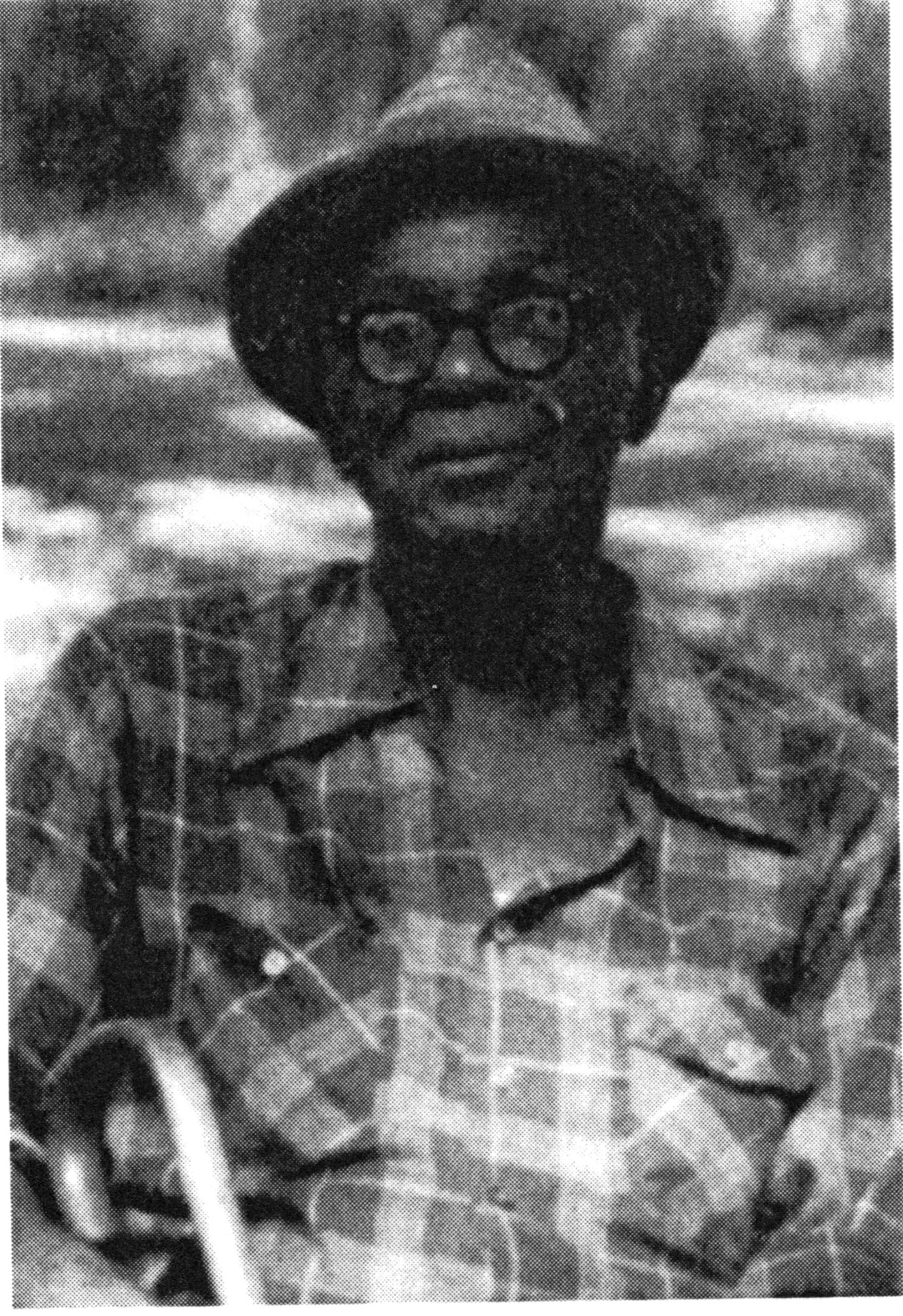
Robert Shephard in his later years (Source: Calvin Ruck, The Black Battalion)

A bachelor throughout his life, Robert was a member of Royal Canadian Legion Branch 34 and 2nd Baptist Church. He passed away at Aberdeen Hospital, New Glasgow, on April 19, 1983, at 90 years of age and was laid to rest in Brookside Cemetery.

23 & 24. Private George William Tarbot and Private Wallace Tarbot:

According to the 1901 Canadian census, George William Tarbot was born at Sand Point, Guysborough County, in July 1884, while his brother Wallace was born at the same location in August 1888. Their parents were James Tarbot, Sand Point, and Mary Jane Benoit (aka Bennett), Arichat. While the family surname was spelled “Tarbot” in older census documents, its spelling gradually transitioned to “Talbot” in the years after the First World War.

James was first married to Annie Campbell, a relationship that resulted in a family of seven children at the time of the 1881 Canadian census. (George later listed James and Annie’s oldest child—his half-brother Frederick—as his next of kin on his military attestation.) George and Wallace were two of at least six children born after James’ marriage to Mary Jane. According to the 1891 and 1901 census records, the family also included Jane (c. 1887), Josephine (c.1889), Louise (c. 1891) and Sarah (c. 1893).

By 1912, Wallace had relocated to New Glasgow, where he worked as a common labourer. On May 12 of that year, he married Elizabeth Blackney, daughter of Gottlieb and Margaret Blackney, in a ceremony held at the United Baptist Church. Four years later, he enlisted with No. 2 Construction Battalion at New Glasgow on July 25, 1916. At the time of his overseas departure, there were three children in the Tarbot household—Fred, age two; Albert, age one; and Leonard, age three months.

Wallace’s brother George enlisted with No. 2 Construction Battalion at Pictou on October 2, 1916. He initially identified his half-brother Frederick Tarbot, Glace Bay, as his next of kin, but later replaced Fred’s name with that of his sister, Mrs. Louise Gregory, Lingan Rd., Sydney. At the time of his enlistment, George was working as “moulder”—a worker who pours molten metal into moulds to produce steel products. George’s occupation and his choices for next of kin suggest that he had been living in Sydney prior to his enlistment.

George and Wallace spent the autumn and winter of 1916-17 training with No. 2 Construction Battalion. While the unit’s headquarters were initially located at Pictou, a move to Truro in September 1916 was no doubt an inconvenience for Wallace, as his family remained in New Glasgow. On March 23, 1917, the brothers departed from Halifax aboard SS Southland and arrived at Liverpool, England, on April 7.

Exactly one month after Wallace arrived overseas—May 7, 1917—his youngest child, five-month-old Leonard, died after contracting measles. Ten days later, Wallace and George crossed the English Channel to France with a large contingent of No. 2 Construction men, destined for service with the Canadian Forestry Corps (CFC) in the Jura District, near the French - Swiss border.

The brothers remained at Jura throughout their time in France. Work in a busy timber harvesting and processing operation could be hazardous at times. On October 6, 1917, Wallace was admitted to CFC Hospital, La Jeux, for treatment of fractured ribs. He spent one month under medical care before returning to duty. One week after Wallace entered hospital, George arrived at the same facility for treatment of a “contusion” to his right hand and was discharged on November 22, 1917.

The winter and spring of 1917-18 passed at Jura without further medical incidents. On July 25, 1918, Wallace was awarded a Good Conduct Badge, having completed two years of military service without a disciplinary infraction. Two days later, George was admitted to hospital for the second time, on this occasion for treatment of “myalgia gen. sev. [general severe].” Considering his age at the time—George was in his mid-30s—it is perhaps not surprising that more than a year of rigorous work in the forestry operation had taken its toll.

On August 16, George was “invalided sick” to the United Kingdom aboard the hospital ship Panama and posted to the Nova Scotia Regimental Depot (NSRD), Bramshott. The following day, he was admitted to Military Hospital, Woking, for medical treatment. In mid-September, George was transferred to the Military Convalescent Hospital, Epsom. He spent another six weeks under medical care before being discharged to NSRD, where he remained for the duration of his time overseas.

Meanwhile, Wallace continued to work alongside CFC personnel in the Jura District. Following the signing of the November 11, 1918 Armistice, CFC Companies ceased cutting timber but processed any harvested logs into lumber. Personnel then began the process of dismantling their sawmills and camps.

No. 2 Construction’s personnel were the first CFC workers to leave France, crossing the English Channel to the United Kingdom on December 14, 1918. George and Wallace were reunited at Bramshott, but followed different paths in returning home.

George departed for Canada aboard SS Aquitania on January 25, 1919, and was discharged from military service at Halifax on February 19, 1919. Military authorities dispatched his British War and Victory service medals to Vale Rd., New Glasgow, on February 25, 1922, suggesting that he was living at that location following his discharge. No further information is available on George’s post-war civilian life or his death.

For reasons that are not explained in his service file, Wallace’s return to Canada was delayed for several months. On January 27, 1919, he was transferred to 2nd CCC [Casualty Clearing Centre], Ripon, the first stage of his journey home. He departed for Canada on May 18, 1919, and arrived at Halifax one week later. Wallace was formally discharged from military service on June 2, 1919, and returned home to New Glasgow.
 
Over the subsequent years, Wallace and Elizabeth had four more children—Lena (1920 - died in infancy), Josephine (1923 - died in infancy), Edna Arvilla (1927 - 2002) and Fred (? - 1977). Wallace worked in the local community as a miner and cement worker until 1946. He passed away at Camp Hill Hospital, Halifax, on July 9, 1949, the result of stomach cancer that had spread to several other organs, and was laid to rest in New Glasgow.

Monday, 24 January 2022

Guysborough County's No. 2 Construction Battalion Enlistments, Part 7

This blog post is the seventh in a series, summarizing the information available on the life and First World War service of Guysborough County's 28 No. 2 Construction Battalion enlistments. Readers are asked to notify the blog author if there are any errors, or if a reader has additional information on any of the men profiled in these posts.

19. Private Joseph Alexander "Joe" Parris:

According to the 1901 Canadian census, Joseph Alexander “Joe” Parris was born at Sand Point, Guysborough County, on March 20, 1899, the son of Charles Levi and Annie Elizabeth Parris. Charles was the son of Isaac and Caroline (William) Parris, while Annie was the daughter of Richard and Anne (Borden) Reddick.

Pte. Joe Parris (center) with brother Bill (far right)

At the time of the 1901 census, Joe’s older brother, William Winslow “Bill,” and younger sister Maria were also part of the household. By 1911, a fourth child, Rita, had joined the Parris family. Census records assembled that year list Joe’s birth date as March 1898.

Joe enlisted with No. 2 Construction Battalion at New Glasgow, NS, on July 25, 1916. His attestation papers record his year of birth as 1897, one or two years earlier than census records indicate. Joe was among the unit’s earliest recruits, as it was authorized only three weeks previously. If the 1901 census entry is accurate, he was only 17 years old at the time.

No. 2 Construction established its initial headquarters at Pictou, in a barracks on the waterfront formerly occupied by the 106th Infantry Battalion. In early September, the unit relocated to Truro, in the hope that the more central location would assist with its recruitment efforts. Joe’s older brother Bill enlisted there on October 10, 1916.

No. 2 Construction Battalion officially mobilized on March 17, 1917, and departed from Halifax aboard SS Southland 11 days later. Joe and Bill were among the approximately 600 men who arrived with the unit at Liverpool, United Kingdom (UK), on April 7 and made their way to Bramshott Camp. Shortly afterward, the unit was reduced to “Company” status, as it was short of the required number of men for “battalion” designation.  

On May 17, 1917, Joe and Bill were part of a detachment of 495 “other ranks” (OR) that crossed the English Channel to France for service in the Canadian Forestry Corps’ (CFC) Jura District, near the Swiss border. Here, the men worked alongside several CFC companies, processing, harvesting and shipping timber in the mountainous area.

On December 12, 1917, Joe was part of a group of 180 No. 2 members dispatched to Central Group, No. 1 District, Alençon. The majority were men from the Caribbean Islands or southern United States, and Jura’s CFC medical officer was concerned that the harsh winter conditions might affect their health. His brother Bill accompanied him to Alençon.

For the remainder of his time in France, Joe worked alongside the men of No. 54 Company, harvesting timber in the Normandy forests. The Alençon camp was more diverse than the Jura district, its work parties including a number of Russians, as well as German prisoners of war.

In mid-September 1918, Joe received the standard two weeks’ leave to the UK granted to soldiers after 15 months’ service in the line. In the aftermath of the November 11, 1918 Armistice, the men at Alençon enjoyed a day-long holiday before returning to work. While harvesting operations ceased, personnel processed the remaining harvested timber before beginning the process of dismantling the lumber camp and sawmill.

No. 2 Construction’s personnel were the first to depart France, returning to the UK on December 14, 1918, and reporting to the Nova Scotia Regimental Depot, Bramshott. One month later, the men boarded the Empress of Britain for the return trip to Canada. The vessel docked at Halifax on January 22, 1919. Joe was discharged from military service on February 12 and returned to Mulgrave.

On December 1, 1924 Joe married Annie Jane Jarvis, daughter of George and Margaret (Mombourquette) Jarvis, Tracadie. The couple established residence in Mulgrave, where Joe joined the local Royal Canadian Legion branch in 1929. Tragically, Annie Jane died at Mulgrave on November 12, 1936. In her late 20s at the time, her death was attributed to a heart condition and lobar pneumonia.

Two years later, Joe married Viola Jane Borden, daughter of Stanley and Lottie (Williams) Borden, Tracadie, in a ceremony that took place in Mulgrave on July 11, 1938. Over the ensuing years, the couple raised a large family in Mulgrave. Joseph Alexander Parris died on April 19, 1972, and was laid to rest in St. Lawrence Roman Catholic Cemetery, Mulgrave.

A more detailed story of Joe Parris’s story, intertwined with an overview of No. Construction Battalion, was posted to this blog on January 30, 2014.

20. Lance Corporal William Winslow "Bill" Parris:

William Winslow “Bill” Parris was born at Sand Point, Guysborough County, on September 2, 1897, the oldest of Charles Levi and Annie Elizabeth Parris’s children. Bill was employed as a “railwayman” when he enlisted with No. 2 Construction Battalion at Truro, NS, on October 10, 1916. His younger brother Joe had joined the same unit in late July.

On March 28, 1917, Bill departed for overseas aboard SS Southland. The vessel arrived at Liverpool, UK, 10 days later. No. 2 Construction Battalion’s personnel then made their way by train to Camp Bramshott. Shortly after their overseas arrival, a shortage of personnel—less than 700 men “all ranks”—led officials to reduce the unit to the status of a “Company.”

On May 16, Bill was promoted to the rank of Acting Lance Corporal without pay. The following day, he crossed the English Channel with a large detachment of No. 2 Construction men. The group travelled to the Canadian Forestry Corps’ (CFC) Jura District, where the men commenced work alongside several CFC Companies, participating in all aspects of the lumber camp’s operation.

The first entry in No. 2 Construction Company’s July 1917 war diary mentioned a “General Sports Day” held at Jura to celebrate the “50th Anniversary of Confederation of [the] Dominion of Canada.” The unit’s men did particularly well, the diary commenting: “Our Track team carried off the honours and won the day.”

The No. 5 District CFC war diary provided further details:

"Dominion Day celebrated by the 11 Forestry Companies and No. 2 Construction Company in this District (No. 5). Field sports held at Chapois….  During the day, the [No. 2 Construction] Band… by their excellent music... greatly assisted in entertaining the crowd and making the holiday a success."

Private Davis, an American No. 2 Construction recruit, placed first in the 100 yard-dash and second in the running broad jump, while Private Whims, one of two brothers from Saltsprings Island, BC, placed first in the sack race "by a big margin".  Bill Parris, the only Nova Scotian listed in the results, placed second in the 440-yard dash. No. 2 Construction Company earned a total of 17 points in the day's events, placing third overall among the 14 French, American and Canadian participating teams.

Three days after the Dominion Day festivities, Bill was “deprived of [his] L[ance Corporal] stripe” for “malingering” (feigning illness). He served at Jura until late December, when he was part of a group of 180 No. 2 Construction personnel transferred to No. 1 District CFC, Alençon. During the ensuing months, the men worked alongside CFC Companies, harvesting timber from the Normandy forests.

The CFC ceased its forest operations shortly after the November 11, 1918 Armistice. Its personnel processed harvested logs before commencing the task of dismantling operations. No. 2 Construction’s men were the first to leave France, crossing the English Channel on December 14, 1918, and reporting to the Nova Scotia Regimental Depot, Bramshott.

Bill and his No. 2 Construction comrades departed for Canada aboard the Empress of Britain on January 12, 1919. The vessel arrived at Halifax after a 10-day voyage. Bill was formally discharged from military service on February 14, 1919, and returned to Mulgrave, where he resumed work as a railwayman.

On July 7, 1920, Bill married Mary Jane Ash, daughter of Charles and Sarah Jane (Desmond) Ash, Monastery, in a ceremony that took place at Tracadie. Over the ensuing years, the couple had nine children, five of whom died in infancy or childhood. A sixth child, Duncan Collins Parris, was killed in a car - pedestrian accident at Point Tupper in 1953. William Winslow Parris died at St. Martha’s Hospital, Antigonish, on October 3, 1968, and was laid to rest in Mulgrave. His wife Mary Jane passed away at Mulgrave in 1977.

21. Private George William Reddick:

According to his attestation papers, George William Reddick was born at Mulgrave, Guysborough County, on April 28, 1892. George’s father Walter was the son of Moses and Caroline (Sheppard) Reddick, Pirates Cove, while his mother Margaret was the daughter of Joseph and Catherine Izzard, Boylston. The couple were married at Mulgrave on May 1, 1884.

Lance Cpl. Bill Parris (left) & Pte. George Reddick

At the time of the 1901 census, the Reddick family included parents Walter, age 41 (DOB March 12, 1860), and Margaret, age 37 (DOB May 2, 1864), and their children: Martha, age 13 (DOB February 27, 1888); Joseph, age 10 (DOB September 10, 1890); Walter Havelock, age 10 (DOB March 9, 1891); George, age seven (DOB April 28, 1893); Rist, age six (DOB October 10, 1895); Margaret, age five (DOB March 18, 1896); and Druscella, age one (DOB April 29, 1900). Adjacent to the Reddick residence was the household of Charles and Annie Parris, which included their sons William Winslow “Bill” and Joseph Alexander “Joe.”

George Reddick attested with No. 2 Construction Battalion at New Glasgow, NS, on July 25, 1916, the same day as Joe Parris. In fact, their consecutive service numbers indicate that they stood together in line. The pair were together during their time in uniform and were later joined by Joe’s brother Bill.

George departed for overseas with No. 2 Construction on March 28, 1917, and proceeded to France with a large detachment of its personnel on May 17, 1917. He served in the Canadian Forestry Corps’ (CFC) Jura District with his comrades for the remainder of the year and was transferred to No. 1 DIstrict, Alençon, on December 30, 1917. Joe and Bill accompanied George to Alençon, where No, 2 Construction men worked alongside No. 38 and No. 42 CFC Companies, harvesting and processing timber from the Normandy forests.

With the exception of a 14-day leave to the United Kingdom in early September 1918, George spent the remainder of his overseas service at Alençon. On December 14, 1918, he crossed the English Channel and reported to the Nova Scotia Regimental Depot, Bramshott, with his No. 2 comrades. One month later, the unit departed for Canada aboard the Empress of Britain.

George was discharged from military service at Halifax, NS, on February 12, 1919. At the time, he gave his proposed address at Marsh St., New Glasgow, as his parents had moved to the Pictou County community while he was overseas.

By 1921, George had relocated to River Hebert, Cumberland County, where he worked as a miner. On July 18, 1921, he married Mary Evelyn Bowles, a native of Brooklyn, Hants County, at the Presbyterian Manse, River Hebert. Mary was the daughter of William Bowles, Amherst, and Eliza Jane Banes. Military authorities dispatched George’s British War and Victory service medals to Joggins Mines in November 1921.

George’s parents spent their remaining days at New Glasgow. His father Walter passed away there on December 16, 1922, while mother Margaret died at the same location on January 16, 1940. Both were laid to rest in a New Glasgow cemetery.

By the early 1940s, George had returned to Guysborough County, where he established residence in Lincolnville. A later obituary makes no mention of children. Mary Reddick passed away at Lincolnville on October 5, 1942, and was buried in Sunnyview Cemetery. George later married Victoria Jordan, a widow. He passed away at Lincolnville on April 11, 1978, and was laid to rest in St, Monica’s Church parish cemetery.

Friday, 31 December 2021

Guysborough County's No. 2 Construction Battalion Enlistments, Part 6

This blog post is the sixth in a series, summarizing the information available on the life and First World War service of Guysborough County's 28 No. 2 Construction Battalion enlistments. Readers are asked to notify the blog author if there are any errors, or if a reader has additional information on any of the men profiled in these posts.


16. Private Michael Redmond Elms:

 According to his military attestation papers, Michael Redmond Elms was born at Tracadie, NS, on May 25, 1895. Unfortunately, the 1901 and 1911 Canadian censuses do not provide any information on his family circumstances. Based on information extracted from his military service file and later marriage record, he was the son of John Redmond and Henrietta “Etta” Elms.

Michael enlisted for service with the No. 2 Construction Battalion at Halifax, NS, on August 28, 1916. At the time, he identified his mother, Mrs. Redmond Elms, Upper Big Tracadie, Guysborough County, as his next of kin. While his attestation document lists his occupation as “labourer,” information in his service file states that he was working as baggage porter at North St. Station at the time of his enlistment.

On March 28, 1917, Michael departed for overseas aboard SS Southland and arrived in the United Kingdom 10 days later. On May 14, 1917, he proceeded to France with a large contingent of No. 2 Construction men, headed for the Canadian Forestry Corps’ (CFC) Jura District, near the Swiss border.

Michael spent the duration of his time on the continent at Jura. On May 13, 1918, he was admitted to CFC Hospital, La Joux, for treatment of “cont. r. foot” [contusion, right foot], likely an injury sustained while working alongside CFC personnel as they harvested and processed timber obtained from the Jura region. After a 12-day stay, Michael was discharged from hospital and returned to duty. Other than a two-week leave to the United Kingdom in late August 1918, he remained at Jura until No. 2 Construction personnel departed France on December 14, 1918.

Michael spent one month in the United Kingdom before leaving for Canada on January 12, 1919. One month later, he was formally discharged from military service at Halifax, NS. On July 2, 1919, Michael married Florence Williams in a United Baptist ceremony that took place at New Glasgow, NS. Florence was the daughter of William and Sarah Williams, Upper Big Tracadie. At the time of his marriage, Michael was living at Halifax, where he was employed as a “sleeping car porter.”

With the exception of a document attached to his marriage license indicating that he and Florence divorced at Halifax on January 24, 1956, no further information is available on Michael Redmond Elms’ postwar life.

17. Private John William Elms:  

John William Elms was born at Big Tracadie, Nova Scotia, on July 22, 1888. The 1891 Canadian census lists John, age two living with his parents, Johnson and Alice (Day) Elms, and siblings Ann Theresa, age seven, and Joseph, age one. Information on the census form lists Alice’s place of birth as Virginia.

John William Elms (front left) & three unidentified No. 2 Construction soldiers

John was still living at home in 1911, although his father had passed away by that time. On May 14, 1913, John married Sarah “Sadie” McPhee, daughter of Archibald and Mary McPhee, Upper Big Tracadie, in a ceremony held at Big Tracadie United Baptist Church. Three years later, his widowed mother Alice married William Henry Gero, son of Thomas and Eliza Gero, in a ceremony held at Truro, NS, on September 21, 1916.

Five days prior to his mother’s second marriage—September 16, 1916—John enlisted with No. 2 Construction Battalion at Truro, NS. According to information in his service file, he and Sadie had two children at the time of John’s enlistment. A two-year-old daughter Elsie, was born in 1914, and an eight-month-old son John Joseph, was born in 1916.

On March 25, 1917, John Elms departed for overseas with No. 2 Construction Battalion aboard SS Southland. The vessel arrived at Liverpool, United Kingdom, on April 7 and its passengers proceeded to military camp in southern England. Six weeks later, a contingent of 525 No. 2 Construction men crossed the English Channel to France. John was among the men who set foot on the continent on May 17, 1917, and proceeded to the Canadian Forestry Corps’ (CFC) Jura District.

Over the next seven months, John  worked alongside several CFC Companies, harvesting and processing timber from the Jura forests. On December 12, 1917, he was part of a detachment of 180 No. 2 Construction personnel transferred to No. 1 District, Alençon. The majority of the men were natives of the southern United States or Caribbean Islands, and the Jura District’s medical officer was concerned that the location’s colder winter weather might negatively impact their health.

John spent the remainder of his time in France in the Alençon District. On September 8, 1918, he received two weeks’ leave to the UK. Shortly before rejoining his unit, he was awarded a Good Conduct Badge, having completed two years’ service without any disciplinary infractions. John worked at Alençon until December 14, 1918, when all No. 2 Construction personnel returned to the Nova Scotia Regimental Depot at Bramshott Camp, UK.

John departed for Canada aboard the Empress of Britain on January 12, 1919, and arrived at Halifax, NS, 10 days later. He was formally discharged from military service at Halifax on February 15, 1919, and returned home. At the time of the 1921 Canadian census, 32-year-old John, farmer by occupation, was residing at Big Tracadie with his wife Sarah, age 27, and their children Elsie, age seven, John J., age five, and James B., age one month. Also living in the home are John’s younger brother Joseph, age 30, his step-father William Gero, age 60, and his mother Alice, age 50.

John remained at Big Tracadie for the remainder of his life. He passed away at Camp Hill Hospital, Halifax, on June 25, 1959, one month shy of his 71st birthday, and was laid to rest in Upper Big Tracadie. John’s son, Norman Arthur Elms, Creighton St., Halifax, was the informant on his death certificate.

18. Private William Henry Gero:

 According to his service file, William Henry Gero was born at Big Tracadie, NS, on September 30, 1876. Canadian census records, however, indicate that he was born much earlier. The 1871 Canadian census lists Henry “Genow,” age 10, as the oldest child of Thomas (age 36) and Lisar [probably Eliza] (age 32) Gero. Also residing in the household were Benjamin, age eight, Thomas, age seven, Charles, age five, Lisar [Eliza], age two and Ann, age one.

The 1881 census lists William Henry “Garon,” age 18, living in the Havre Boucher district of Antigonish County with his widowed father Thomas and siblings Benjamin, age 16, Thomas, age 14, Charles, age 12, Eliza Mary, age nine, Bessie Ann, age eight, Norman, age six, and Insana [sic], age four.  Later that same year, Thomas “Gerrow,” son of Benjamin and Hannah, married Margaret A. Dismal [Desmond], age 27, daughter of Christopher and Rebecca Dismal, in a ceremony that took place at Havre Boucher on August 18, 1881. While the 1901 census lists Thomas and his wife Margaret residing at Linwood, Antigonish County, William Henry is no longer living at home. His whereabouts then and at the time of the 1911 census 10 years later are unknown.

September 1916 proved to be an eventful month for William. His father passed away at Big Tracadie on September 3, 1916. Thomas was 86 years old at the time of his death and was laid to rest in the United Baptist Cemetery, Big Tracadie. William, his eldest child, was listed as informant on the death certificate. On September 16, William married Alice Elms [the marriage license records Alice’s surname as Gero], a 40-year-old widow and daughter of Margaret and John Day, Big Tracadie, in a ceremony held at Truro, NS.

Two weeks after his marriage—September 30, 1916—William enlisted with No. 2 Construction Battalion at Truro. As at the time of his marriage, William claimed to be 40 years old, but census records suggest that he was likely in his mid-fifties at the time. His military service papers also indicate that William had two dependents—James, age 12, and Annie, age seven. Information on his death certificate suggests that they were children from Alice’s first marriage.

On March 25, 1917, William departed Halifax with No. 2 Construction Battalion aboard SS Southland and disembarked at Liverpool, UK, two weeks later. On May 17, he proceeded to France with a large group of No. 2 Construction personnel, destined for the Canadian Forestry Corps’ (CFC) Jura District. William served in the Jura forests alongside CFC personnel for the duration of his time overseas.

On September 22, 1918, William was awarded a Good Conduct Badge, in acknowledgment of two years’ military service without a disciplinary infraction. He departed France with No. 2 Construction on December 14, 1918, and returned to the Nova Scotia Regimental Depot, Bramshott, UK. One month later, William sailed for Canada aboard Empress of Britain, arriving at Halifax on January 22, 1919. He was formally discharged from military service on February 14 and returned to the Big Tracadie area.

Military authorities forwarded William’s British War and Victory service medals to Big Tracadie, NS, on September 2, 1922. William Henry Gero passed away at Colchester County Hospital, Truro, NS, on October 8, 1945. At the time of his death, he was living at Prince St., Truro, and was laid to rest in the same community. Informant on William’s death certificate was his step-son, John Elms, Upper Big Tracadie, NS.

Monday, 29 November 2021

Guysborough County's No. 2 Construction Battalion Enlistments, Part 5

 This blog post is the fifth in a series, summarizing the information available on the life and First World War service of Guysborough County's 28 No. 2 Construction Battalion enlistments. Readers are asked to notify the blog author if there are any errors, or if a reader has additional information on any of the men profiled in these posts.


13. Private James William Desmond:

According to his military service file, James William Desmond was born at Guysborough, NS, on August 1, 1897. At the time of his enlistment, James identified his grandmother Mrs. Samuel Desmond—Sarah Byard—as his next of kin. Sarah, a daughter of Samuel and Mary Byard, married Samuel Edward Desmond, son of Richard and Amelia Desmond, in a ceremony held at Guysborough on January 7, 1874. Samuel earned his livelihood at sea, his marriage license listing his occupation at the time as “mariner.”

Official documents recorded the family surname in several ways—Desmall (the couple’s marriage certificate), Dissmond (1881 Canadian census), Dismal (1891 Canadian census) and Disney (1901 Canadian census). By 1911, official documents used the modern spelling “Desmond,” which appears throughout James’s service file.

Available census records indicate that Samuel and Sarah Desmond had two children—a son Frank, born on July 3, 1881, and a daughter Gertie, born on June 15, 1885. While James referred to their mother Sarah as his grandmother, available documents fail to prove that either one was James’s parent.

Frank eventually married, although no official record can be located. He settled at North Sydney around 1908 and found work in the local coal mines. Frank died at Harbour View Hospital, North Sydney, on June 6, 1922, at age 42. The cause of death was listed as “broken back,” perhaps the result of a mishap at work, although his death certificate makes no mention of an accident.

Frank’s sister Gertie married James Godfrey Skinner, son of Godfrey and Nancy Ann (Armsworthy) Skinner, at Guysborough on June 8, 1905. According to the couple’s marriage license, Gertie was born at Boston, MA, suggesting that Sarah may have accompanied Samuel on his sailing voyages. At the time of the 1911 census, James and Gertie had two children, James (July 1903) and Sarah Ellen (November 1905). Sadly, Gertie passed away at Guysborough on March 17, 1913, the result of tuberculosis.

On August 18, 1916, James Desmond enlisted with No. 2 Construction Battalion at its Pictou, NS headquarters. He stood five feet four inches and weighed 135 pounds at the time. While James claimed to have been born on August 1, 1897, making him 19 years old at the time, later documents in his service file suggest that he was likely born in 1900.

James departed for overseas with No. 2 Construction Battalion on March 25, 1917, and arrived in the United Kingdom two weeks later. On May 17, he departed for France with a contingent of 525 No. 2 Construction personnel and reported to the Canadian Forestry Corps’ Jura District, near the Swiss border, shortly afterward. For the remainder of the year, James worked alongside CFC personnel, harvesting, processing and shipping timber in the heavily forested area.

In December 1917, James was one of 180 No. 2 Construction men transferred to No. 1 District, Alençon. The majority were men from the Caribbean Islands or southern United States. CFC officials were concerned that the colder winters in the Jura District might negatively impact their health. The group was attached to CFC’s No. 54 Company and worked in the forests of Normandy, where winters were much milder, for the remainder of their time in France.

James was hospitalized on several occasions during his time at Alençon. In late March 1918, he was briefly admitted to No. 10 General Hospital, Rouen, suffering from “debility.” Discharged after three days, he returned to duty, only to be re-admitted for treatment of bronchitis in late April. Discharged to No. 5 Convalescent Depot, Rouen, on May 5, he spent six weeks recuperating before reporting to Canadian Base Depot, Étaples, on June 13.

Two days later, James was admitted to No. 7 Canadian General Hospital, Étaples, for treatment of “ICT [inter-connective tissue wound] left hand.” Released to No. 14 Convalescent Depot one week later, he once again returned to Base Depot, Étaples, on July 6, only to be re-admitted to hospital for treatment of “periostitis”—inflammation of the connective tissue that surrounds bone—on July 15.

Following two weeks’ treatment, James was discharged to a convalescent depot on August 1 and returned to Base Depot one week later. He rejoined his No. 2 Construction mates at Alençon on August 17 and was attached to No. 43 Company, CFC. For reasons that are not explained in his service file, James was assigned to “detention hospital” at Alençon on November 2, and was transferred to a second “detention” facility at Conches four days later.

When the November 11, 1918 Armistice brought fighting to an end, timber harvesting ceased in all CFC districts and harvested logs were processed before personnel dismantled the sawmills. While his service file does not provide a date for James’s hospital discharge, he returned to the United Kingdom with his No. 2 Construction mates on December 14, 1918, and departed for Canada aboard SS Empress of Britain on January 12, 1919. The vessel docked at Halifax, NS, after a nine-day crossing. On February 15, 1919, James was discharged from military service and returned home to Guysborough.

James’s post-war days was short-lived. On August 12, 1919, he passed away suddenly at Guysborough. According to his death record, he was 19 years old at the time of his death and had been ill with tuberculosis for one month. The register identified James’s occupation as “soldier” and mysteriously listed his marital status as “widower.” More perplexing was an entry that identified James’s father as James Ryan, who was also the informant. Available documents do not provide any information on James Ryan, keeping the identity of James Desmond’s parents an unsolved mystery.

14. Private Alexander Elms:

According to his military attestation, Alexander Elms was born at Big Tracadie, Guysborough County, on February 28, 1889. Alex identified his mother, Mary Elms, Tracadie, as his next of kin. Mary Jane Elms was born at Tracadie on October 30, 1870, the daughter of Joseph and Jane Elms, who were married at Tracadie in February 1864.

The 1891 Canadian census identifies Alexander, age two, as the “son” of Joseph Elms, age 64, farmer, and his wife Janie, age 50. Also in the home at the time were three of Joseph and Jane’s children—Henry, age 23; Alex’s mother Mary, age 20; Henrietta, age 19, and Freeman, age 17. One decade later, the 1901 census identifies Henry as the head of a household that included his mother Jane and his siblings Annie and Freeman. Mary and Alex no longer reside there and do not appear elsewhere in 1901 or 1911 Nova Scotia census data.

Alex Elms attested for service with No. 2 Construction Battalion at Halifax, NS, on August 29, 1916. At that time, he gave his address as 131 Albemarle St., Halifax. Alex stood almost five feet 11 inches and weighed 162 pounds at the time, considerably larger in both categories than many of his comrades. Other than a brief hospitalization at Truro in early December 1916 for treatment of “Bell’s paralysis,” Alex spent the winter of 1916 - 17 training and working alongside his fellow No. 2 Construction recruits.

The unit departed for overseas aboard SS Southland on March 25, 1917, and disembarked at Liverpool, UK, two weeks later. Alex was admitted to Canadian Military Hospital, Eastbourne, for treatment of measles on April 21, but was discharged on May 5. Twelve days later, he was part of a large detachment of No. 2 Construction men that departed for France for service with the Canadian Forestry Corps (CFC).

Upon landing on the continent, the group made its way to the Jura District of France, where several CFC companies harvested and processed timber in in a mountainous, forested area adjacent to the Swiss border. In late December 1917, Alex was part of a detachment transferred to No. 1 District, Alençon, approximately 200 kilometres west of Paris, where No. 2 Construction personnel worked in the Normandy forests alongside several CFC companies.

With the exception of 14 days’ leave to the United Kingdom in mid-September 1918, Alex remained at Alençon for the duration of his time in France. Harvesting operations ceased following the signing of the November 11, 1918, Armistice and CFC units processed the remaining logs at their sawmills before ceasing production. On December 14, all No. 2 Construction personnel on the continent were transferred to the United Kingdom and posted to the Nova Scotia Regimental Depot, Bramshott. One month later, Alex and his mates departed for Halifax, NS, aboard SS Empress of Britain.

Alex was discharged from military service at Halifax on February 13, 1919. A “Form of Affidavit” signed the following day registered the marriage of Alexander Elms, Big Tracadie, bachelor and “soldier,” age 31, to Bessie Blackburn, Halifax, NS, a 28-year-old spinster. Unfortunately, the document provides no further details on either party’s family background.

According to his discharge papers, Alex returned to Upper Big Tracadie. Nova Scotia marriage records for the year 1920 include a marriage license for Alexander Elms, bachelor, labourer, age 31, born and living at Big Tracadie, son of Joseph Elms and Mary Ann [sic] Elms, and Rosie Jane Ash, age 26 domestic, widow, born at Guysborough, living at Upper Big Tracadie, daughter of Ruben Pelley and Sarah “Sadie” Dorrington. The wedding ceremony took place at Tracadie on February 12, 1920, with Joseph A. Desmond, Upper Big Tracadie, and Mrs. Michael R. Elms, Upper Big Tracadie—the wife of another No. 2 Construction soldier—as witnesses.

At the time of the 1921 Canadian census, 33-year-old Alex was living at Upper Big Tracadie with his wife, 27-year-old Rose Jane, and their young daughter Sophie. Also residing in the household were lodger Freeman Ash, age 27, labourer, and “servant” Gussie Ash, age 19. Tragically, Rosey Jane passed away at West St., Antigonish, on March 16, 1926, after a two-month battle with cancer and was laid to rest at Tracadie. Her husband Alex was informant on her death certificate.

A 1930 Province of Nova Scotia death certificate records the passing of Alexander Elms, Monastery, NS, at Camp Hill Hospital, Halifax, on January 19, 1930. Details on the document indicate that Alex had been at Camp Hill for three months and identified the cause of his passing as “chronic nephritis with heart failure.” Unfortunately, the document does not include his parents’ names, and gives his marital status as “single.”

Curiously, the birth date listed on the form—March 14, 1897—corresponds with that of another No. 2 Construction enlistment, Alexander Benjamin Elms [see below]. As Camp Hill was a military hospital, admission was restricted to veterans. It is quite possible that authorities obtained the birth information from the incorrect service file. Library & Archives Canada’s Canadian Expeditionary Force database identified only two “Alexander Elms” as having served during the First World War, both No. 2 Construction Battalion enlistments. Alex’s death certificate does not provide a place of interment.

 15. Private Alexander Benjamin Elms:

 
According to his military service file, Alexander Benjamin Elms was born at Big Tracadie, Guysborough County, on March 14, 1897, the son of Benjamin and Sarah Margaret (Jordan) Elms. The 1901 Canadian census for the Tracadie area lists Alexander, age four, living with his father Benjamin, age 67, his mother Sarah, age 42, and siblings Georgina, age 11, and John, age nine. An older sister Ida, identified in the 1891 census as nine years old at that time, was no longer a member of the household.a

Sometime prior to 1913, Benjamin Sr. passed away. On July 16, 1913, Sarah married William Simons, a 60-year-old widower and native of Bermuda, in a ceremony held at Antigonish, NS. While William was residing at Hopewell, Pictou County,at the time of the wedding, the couple eventually relocated to Willow St., Truro, NS, where Sarah’s son Alexander Benjamin enlisted with No. 2 Construction Battalion on August 8, 1916.

Ben stood five feet nine inches and weight 148 pounds at the time of his enlistment. Apparently an exuberant 19-year-old, he was sentenced to one week’s detention for “insubordination” on October 17, 1916. Ben spent the winter of 1916 - 17 at Truro, where he was admitted to hospital on March 17, 1917 for treatment of frostbite. He was discharged to duty on March 25 and immediately joined his comrades aboard SS Southland at Halifax for the journey across the North Atlantic.

The vessel arrived at Liverpool, UK, on April 7 and No. 2’s Construction’s personnel made their way by train to camp in southern England. On May 17, Ben was among the 525 No 2 Construction men who crossed the English Channel to France and made their way to the Jura District of France for service with the Canadian Forestry Corps.

Ben remained at Jura throughout his time in France. Briefly hospitalized for treatment of “PUO”—a “fever of unknown origin”—on June 27, 1918, he was discharged to duty after a three-day stay. Granted leave to the United Kingdom on July 4, he rejoined his comrades in France on July 21 and returned to work alongside CFC personnel.

In mid-October 1918, Ben was hospitalized for treatment of a bacterial infection. Discharged to duty in early November, he returned to the Nova Scotia Regimental Depot, Bramshott, UK, with his comrades on December 14, 1918, but was re-admitted to hospital in early January 1919. As a result, he was not among the No. 2 Construction men who returned to Canada aboard SS Empress of Britain in mid-January.

Ben was discharged from hospital in mid-February and returned to Canada aboard SS Lapland several days later. The vessel arrived at Halifax on March 1, 1919. While awaiting his discharge, Ben fell ill and was admitted to hospital on March 20. Medical records indicate that he was suffering from an “attack of [a] severe type” of smallpox at the time. Ben spent three weeks in hospital before being transferred to the Casualty Company on April 8, 1919. Six days later, he was discharged from military service and returned home.

On September 1, 1920, Alexander Benjamin Elms married Margaret Johanna Clark, a 21-year-old spinster and daughter of William Clark and Sarah Williams, in a ceremony held at Upper Big Tracadie. The following year’s Canadian census lists Benjamin Elms, age 31, labourer, living at Big Tracadie with his wife Margaret, age 22. Also in the home are Ben’s niece, Mary B. Elms, age 20, what appears to be her daughter Mary, age one, and Ben’s half-sister Georgia [possibly the “Georgina” from the 1901 census records] Morris, age 30.

No further information is available on Ben’s post-war life. He passed away in 1984 and was laid to rest in Tracadie United Baptist Church Cemetery, where a Commonwealth War Graves Commission headstone marks his final resting place.