Contact Information

E-mail: brucefrancismacdonald@gmail.com

Tuesday, 7 February 2023

Private James Burton Cluney—Died of Illness May 11, 1934

 James Burton Cluney was born in Indian Harbour, Guysborough County, on November 22, 1876, the oldest of Thomas and Sarah Catherine “Kate” (Bennett) Cluney’s eight sons. Thomas Burton traced his Cluney roots to Thomas Cluney, born in Waterford, Ireland, in 1812. A farmer by occupation, Thomas married Mary Bridget McCoy, also a native of Waterford. The couple immigrated to Nova Scotia, where they settled in Indian Harbour, Guysborough County, and raised a family of 12 children.

Pte. James Burton Cluney's headstone, Sherbrooke, NS

Thomas Cluney Jr., one of Thomas and Mary’s sons, was born in Indian Harbour on June 3, 1849, and married Sarah Catherine “Kate” Bennett, daughter of James and Elizabeth (Suyden) Bennett, in a ceremony held in Sherbrooke on October 28, 1875. At the time of the 1881 Canadian census, two young sons, James Burton, age four, and Angus, age two (DOB January 24, 1879), were living in the Cluney household, along with their grandfather, Thomas Cluney Sr., age 69.


Over the next two decades, six more sons joined the Cluney family—William T. (DOB March 4, 1882), Edward (DOB c. 1884), Robert (DOB July 1, 1890), Archibald (DOB December 28, 1892), Charles (DOB June 1, 1894), and Henry (DOB December 1900). While James Burton was still living at home at the time of the 1901 census, he was no longer residing there 10 years later. His exact whereabouts are unknown.

On May 15, 1915, James Burton Cluney married Mary C. (Johnson) Lawson, a 30-year-old widow and daughter of Thomas and Priscilla Johnson, Country Harbour, in a ceremony held in Sherbrooke. At the time of his marriage, James, a farmer by occupation, was living in Indian Harbour, where the couple established residence. Two children soon joined the family—a daughter Janet, date of birth unknown, and a son, Burton Thomas, born in late 1916.

While married with two young children, James was soon caught up in the “war fever” sweeping across the province during the months following his marriage. On January 10, 1917, he enlisted with the 246th Battalion at Halifax, NS. At the time, he gave his occupation as “lumberman” and listed his wife Mary as next of kin.

Perhaps not surprisingly under the circumstances, James gave his year of birth as 1888, making himself 12 years younger. Had authorities known that he was 40 years old at the time, it is doubtful that he would have been accepted into an infantry unit.

Within weeks of James’ enlistment, tragedy struck the Cluney family. On February 17, 1917, his wife Mary died of tuberculosis in Sherbrooke. James arranged for H. Roy Cameron, Sherbrooke, to assume guardianship of his two children, entitling Roy to the separation allowance which James’ deceased wife would have received while he served overseas.

On May 23, 1917, James was transferred to the Nova Scotia Forestry Depot. He departed from Halifax aboard SS Justicia in late June and arrived in the United Kingdom on July 4, 1917. James was immediately posted to the Canadian Forestry Corps’ Base Depot at Sunningdale, where a medical examination determined that his “left foot [was] slightly flat and pronated.” Despite the impediment, he was assigned to duty with No. 59 Company, CFC, on June 28. Two days later, James crossed the English Channel to France with his new unit.

No. 59 Company had been organized and recruited as the Nova Scotia Forestry Depot in 1917. Its personnel had travelled to England aboard SS Justicia in late June and reported to CFC Headquarters, Sunningdale, where they were reorganized into No. 59 Company. The unit landed in France on July 30 and set out for the Bordeaux region, located in southwestern France, adjacent to the Bay of Biscay.

The Company was assigned to duty in No. 12 District, CFC, which became known as the Bordeaux Group. The District, also a new entity, was assigned the task of harvesting mature pine from the “Landes forest.” Located in the historic Gascony region of southwestern France, the area was originally covered with swamps and moors. During the 18th and 19th centuries, pine plantations were established throughout the area, halting erosion and reclaiming the land for human use.

By the early 1900s, the forest covered large areas of Landes and Gironde, two of France’s administrative “departments.” With timber resources dwindling in areas already being exploited, the French government granted the CFC permission to selectively harvest mature trees from the area. No. 12 District established its initial headquarters in Bordeaux, the prefecture (administrative capital) of Gironde. The first CFC units arrived in the area in July 1917 and mill production commenced before month’s end.

On August 4, the CFC’s No. 59 and 60 Companies arrived at Belin-Béliet, Gironde, approximately 60 kilometres south of Bordeaux, and immediately commenced establishing a lumber harvesting and processing operation in the nearby forests. No. 59’s mill commenced operation on September 20, processing logs harvested by its crews since their arrival.

By the end of October, six Canadian portable mills were operating in the District. At that time, its resources consisted of 82 officers, 2,380 “other ranks” and 969 horses. In mid-December, CFC personnel commenced construction of a 50-bed hospital at Facture, where the District’s shipping railhead was located.

In mid-February 1918, No. 12 District headquarters relocated to Facture, approximately 50 kilometres southwest of Bordeaux. The move placed administrative staff much closer to forestry operations, making oversight more convenient. Simultaneously, No. 59 Company—James Burton Cluney’s unit—relocated to Parentis-en-Born, Landes, close to the Bay of Biscay, where it established a new camp and began harvesting the nearby forests.

For more than a year, James served in France without incident. Toward the end of August 1918, he contracted typhoid fever. While medical records indicate that he had recovered from “two previous attacks” of the illness, James became “seriously ill” on this occasion. On September 5, 1918, he was admitted to hospital at Facture, where medical staff determined that he was suffering from “nephritis” (inflammation of kidney tissue).

After two weeks of care and rest, his “condition improved” significantly. On October 10, hospital authorities removed his name from the “seriously ill” list, but he remained under medical care. By late November, James had recovered sufficiently to be invalided to England, where he was admitted to No. 4 Canadian General Hospital, Basingstoke.

A thorough medical examination at admission determined that James was suffering from “venous thrombosis (following typhoid fever).” Shortly after being allowed out of bed in late October, his left leg began to swell below the knee. At the time of his arrival in Basingstoke, medical records state that he looked “60 years of age in appearance, [was] debilitated and thin.” His left leg was “swollen, bluish purple [in] colour. Veins of calf are cord-like, heart slightly enlarged.”

James spent almost three months in hospital before he was well enough to travel. On February 27, 1919, he was transferred to No. 5 Canadian General Hospital, Liverpool, where a note in his medical record indicated that there was “no swelling [of his leg] at present as he stays in bed mostly. Awaiting HS [hospital ship] to Canada.”

On March 11, James departed for Canada aboard the hospital ship Araguaya. He arrived in Halifax 11 days later and was immediately admitted to Camp Hill Hospital, where he was diagnosed with “phlebitis thrombosis [inflammation of a vein near the surface of the skin].” Medical staff indicated that “after a couple mile walk [sic] left leg gets tired and starts to swell. Ordered to wear a bandage elastic web.”

A Medical History of An Invalid form, completed at Camp Hill Hospital in early July, stated that James was suffering from debility, numbness and swelling of the left leg, which was still enlarged and “somewhat bluish,” the veins on its inner side “cord-like.” His heart was “slightly enlarged,” with “every 25 or 30 beats missed.” Medical staff assessed James’ debility as “permanent with possible improvement.”

James was released from hospital on July 12 and discharged from military service six days later, “being no longer physically fit for war service.” He returned to his parents’ Sherbrooke home, where he found work as a labourer in a local sawmill. At the time of the 1921 Canadian census, James and his son Thomas Burton, age four, were living in Sherbrooke with his parents Thomas, age 71, and Sarah, age 63. Also in the home were James’ younger brothers Charlie, age 28, and Sydney, age 20. The fate of James’ daughter Janet is unknown.

On February 1, 1922, James married Ethel Munro, daughter of Joseph and Mary (Hendsbee) Munro, Half Island Cove, in a ceremony that took place in Sherbrooke. The couple established residence in Half Island Cove, where they raised a family of four children—sons Robert Doyle (DOB September 22, 1923) and Murray Forrester (YOB c. 1924), and daughters Hattie Mae (YOB c. 1922) and Winnifred Gertrude “Winnie” (YOB c. 1925).

While the decade following James and Ethel’s marriage passed without incident, two successive tragedies in the mid-1930s led to the family’s dissolution. On May 11, 1934, James Burton Cluney died at Sherbrooke, the result of cerebral thrombosis. Canadian military authorities attributed the cause of death to his overseas military service. James was laid to rest in St. James Anglican Cemetery, Sherbrooke. A little more than a year later, his widow Ethel passed away on June 1, 1935, after a two-year battle with tuberculosis.

Following their parents’ deaths, the Cluney children remained in the Half Island Cove area, where their maternal grandmother, Mary Munro, cared for them. James Burton and Ethel’s eldest child, Robert Doyle Cluney, enlisted with the Canadian Active Service Force at New Glasgow, NS, on April 23, 1942. Robert arrived overseas in late March 1943 and was assigned to the West Nova Scotia Regiment. He departed for Italy with the West Novas in early July 1943 and was killed in action near Ortona, Italy, on December 12, 1943. A detailed story of Robert’s service is available on the Second World War Honour Roll of Guysborough County, Nova Scotia blog.

Photograph of James Burton Cluney's headstone courtesy of Hattie M. Creamer, Canso, NS.

Wednesday, 23 March 2022

Guysborough County's No. 2 Construction Battalion Enlistments, Part 9

This blog post is the ninth and final in a series, summarizing the information available on the life and First World War service of Guysborough County's 28 No. 2 Construction Battalion enlistments. Readers are asked to notify the blog author if there are any errors, or if a reader has additional information on any of the men profiled in these posts.


25, 26 & 27. Privates Angus, James Alexander & William John Tarbot/Talbot:

Brothers Angus, James Alexander and William John Tarbot were born at Sand Point, near Mulgrave, Guysborough County, sons of Edward and Elizabeth “Lizzie” (Benoit/Bennett) Tarbot. The family surname was spelled “Tarbot” in earlier documents, but transitioned to “Talbot” in the years following the First World War.

James Alexander was the oldest of the brothers. According to his death certificate, he was born on April 1 1892. Military service files list William John’s birth date as September 2, 1896, while Angus’s birth date is recorded as May 15, 1897. Census records, however, suggest that Angus was likely born in 1898 or 1899.

At the time of the 1901 Canadian census, the three boys were living with their mother Lizzie in the household of their grandparents, James and Mary J. Tarbot, Mulgrave. On October 22, 1903, Lizzie married Dominick Marshall at Sydney, NS. The couple took up residence on Lingan Road, where Lizzie’s three sons became part of the household. Lizzie gave birth to a daughter Jennie in November 1906. By 1911, James, the oldest of the three brothers, was working as a labourer in the local steel plant, where his step-father Dominick was employed as a foreman.

Following the formation of No. 2 Construction Battalion on July 5, 1916, the three Tarbot brothers were among its earliest enlistments. James and William joined the unit at New Glasgow on July 25, while Angus enlisted the following day. The trio commenced their military service in a barracks on the Pictou waterfront and relocated to Truro with the battalion in September.

Angus, James and William spent the winter of 1916-17 in Truro and departed for overseas aboard SS Southland on March 18, 1917. The brothers arrived in the United Kingdom on April 7. Six weeks later, the brothers crossed the English Channel to France as part of a large detachment of No. 2 Construction personnel who landed on the continent on May 17, 1917.

The men were assigned to the Canadian Forestry Corps’ Jura District, near the Swiss border, where No. 2 Construction personnel worked alongside several CFC Companies, harvesting and processing timber in the mountainous region. The district’s mill specialized in the production of wooden ties for small-gauge railways constructed behind the front lines.

James and William remained in the Jura District for the duration of their overseas service. During that time, both were hospitalized with minor medical issues, but quickly recovered after treatment. In late December 1917, their younger brother Angus was part of a detachment of No. 2 Construction personnel transferred to CFC’s No. 1 District, Alençon, located in the Normandy forests. The group consisted mainly of No. 2 Construction men from the southern United States and Caribbean islands, judged by CFC officers to be susceptible to the Jura District’s colder winters. Angus worked in the Alençon district for the remainder of his time in France.

Following the signing of the November 11, 1918 Armistice, CFC harvesting operations ceased and sawmills processed the remaining harvested logs. CFC personnel then dismantled the mills and lumber camps. No. 2 Construction men were the first to return to the United Kingdom, gathering near Étaples and crossing the English Channel in one group on December 14, 1918.

While Angus and James departed for Canada aboard SS Empress of Britain on January 12, 1919, with the majority of No. 2 Construction men, post-Armistice health issues delayed William’s return until May 18, 1919, when he sailed for home aboard SS Aquitania. Angus and James were discharged from military service at Halifax on February 14, while William was discharged at the same location on June 2, 1919.

The brothers gave their post-war address as 79 Lingan Road, Sydney, the address where their mother and step-father resided. The trio remained in the Sydney area over the next several decades. Their mother Lizzie passed away from lobar pneumonia at 79 Lingan Road, Sydney, on March 24, 1934, and was laid to rest in New Calvary Cemetery, Sydney.

On February 21, 1920, William was working as a “machinist” at the time of his marriage to Violet Walker, daughter of John and Helen (Arsenault) Walker, Montreal, QC. The ceremony took place at St. Alban’s Rectory, Sydney, NS. The marriage was short-lived, as Violet appears to have passed away within the next three years. On March 17, 1924, William, a widower, married Agnes McKinnon, daughter of Roderick and Sarah (McDonald) McKinnon, Glace Bay.

William John Talbot succumbed to pulmonary tuberculosis at 116 Tupper St., Sydney, on February 9, 1945. He had retired from his position as  “steelworker foreman” with Dominion Iron & Steel Corporation the previous year. William was interred in the New Calvary Cemetery, Sydney, NS. There is no record of children from either marriage in available documents.

After returning to Sydney, Angus found work in the local coal mines. On September 26, 1926, he married Rhoda Hanrahan, daughter of Welsey and Rhoda (Morgan) Hanrahan, in a ceremony that took place at 36 Lingan Road, Sydney. Rhoda was a native of Dominion No. 6, while her father Welsey was born in Newfoundland.

Angus worked as a general labourer at the Sydney still plant until 1954. He passed away at Curry’s Lane, Sydney, on December 7, 1955, the result of chronic myocarditis, and was laid to rest in Hardwood Hill Cemetery, Sydney. There is no record of children in available documents.

On March 17, 1924, James Alexander married Margaret LeBlanc, daughter of Charles and Sophie LeBlanc, East Margaree, in a ceremony that took place at 79 Lingan Road, Sydney, NS. The couple had at least one child, Lawrence James, born in 1930. Following his first wife’s passing, James married Josephine Jarvis, daughter of George and Margaret (Mombourquette) Jarvis, Tracadie, in a ceremony that took place in Mulgrave, NS.

James passed away at St, Martha’s Hospital, Antigonish, on October 9, 1970. Widowed at the time of his death, he had been residing in Mulgrave prior to being admitted to hospital following a heart attack. James was laid to rest in New Calvary Cemetery, Sydney. A son William, 113 Tupper St., Sydney, was listed as informant on his death certificate.

28. Private Hartley Fraser Jackson:

Hartley Fraser Jackson was born in Birchtown, near Manchester, Guysborough County, on September 10, 1898. Hartley’s father, William Henry Jackson (DOB February 20, 1865), was also a Manchester native, the son of John and Agnes (Devost) Jackson. On May 19, 1887, William Henry married Sarah Elizabeth Williams, daughter of John and Caroline Williams, Tracadie, in a ceremony that took place in Manchester.

By 1901, the Jackson household consisted of William, Sarah and five children—Caroline “Carrie” (DOB September 15, 1889), Mary E. (DOB March 20, 1890), William Ernest (March 15, 1893), Fannie E. (DOB March 1, 1895) and Hartley. Over the following decade, three more children joined the family—John J. (DOB September 1901), James (DOB May 1906) and Charles A. (DOB June 1907). Sarah Jackson passed away sometime after 1911. On December 22, 1916, William married Maryanne Morris, daughter of Thomas and Sarah Morris, Birchtown, in a ceremony held at Sunnyville, Guysborough County.

Five months prior to his father’s second marriage, Hartley enlisted with No. 2 Construction Battalion at New Glasgow, NS, on July 16, 1916. At the time, he gave his birth date as May 15, 1897, which differs from the information contained in 1901 (September 10, 1898) and 1911 (September 1899) census documents. Hartley identified his older sister Fannie as his next of kin and gave his address as Boylston, Guysborough County.

Hartley was briefly hospitalized with tonsillitis at Truro on March 21, 1917, but was discharged in time to proceed overseas with No. 2 Construction aboard SS Southland one week later. The unit disembarked at Liverpool, United Kingdom, on April 7 and traveled by train to a military camp at Seaford, England.

On May 17, 1917, a detachment of approximately 500 No. 2 Construction personnel crossed the English Channel to France, in the company of 11 officers. Upon disembarking at Le Havre, the group made its way to the Canadian Forestry Corps’ Jura District, near the Swiss border, where the men commenced work alongside several CFC Companies, harvesting and processing timber in the mountainous region.

On November 13, 1917, Hartley was part of a group of 50 No. 2 Construction men attached to No. 37 Company, CFC, located at Cartigny, near Péronne, France.  The No. 9 District (Bordeaux Group) to which No. 37 belonged operated behind the forward area, the closest CFC operation to the front lines. The No. 2 Construction men sent to Cartigny had numerous disciplinary infractions on their service record. It was thought that an assignment not far from the front lines would have a positive effect on their behaviour.

Hartley’s service record contains six infractions prior to his departure for Péronne. For a young man who was either 18 or 19 years old at the time and unfamiliar with the demands of military service, this is perhaps not surprising. In general, CFC camps were “rough and tumble” operations, not unlike Canadian lumber camps of the day, and District war diaries describe numerous incidents among CFC personnel.

While working at Péronne, Hartley and his compatriots experienced the impact of the German Spring 1918 offensive. Given the code-name “Operation Michael,” the massive attack on the Allied line commenced on March 21, 1918. During the following two weeks, German forces advanced approximately 65 kilometres toward Amiens before Allied forces managed to re-establish solid defensive positions.

The advance placed the CFC operation at Péronne within range of German artillery, forcing all personnel to retreat to a CFC camp at Wail, where they remained for the remainder of their service in France. During his time there, Hartley was admitted to No. 59 Casualty Clearing Station with a “wounded neck” on May 4, 1918. His service file contains no details on the circumstances in which he was injured. Hartley was discharged to duty five days later, suggesting that the injury was not serious.

Following the signing of the November 11, 1918 Armistice, CFC units ceased cutting operations and processed any remaining harvested logs. No. 2 Construction personnel were the first to leave the continent, gathering at Étaples, France, and crossing the English Channel on December 14, 1918. One month later, the bulk of the unit’s members boarded SS Empress of Britain and departed for Canada.

Huntley was part of this group, arriving at Halifax on January 22, 1919. He was discharged from military service on February 11 and returned home to Manchester. On November 20, 1920, Hartley married Cora May Morris, daughter of Thomas and Mary Ann Morris, Manchester. The young couple initially established residence in their home community, but later moved to Priestville, on the outskirts of New Glasgow, where Hartley worked as a general labourer.

Hartley and Cora raised a family of three children—Gladys (Mrs. Richard Evans, Halifax), Evelyn (Mrs. James Reddick, Vale Rd., New Glasgow), and Henry (Halifax). Private Hartley Fraser Jackson passed away at Aberdeen Hospital, New Glasgow, on March 27, 1969, the result of “acute pulmonary oedema” (fluid buildup in the lungs). He was laid to rest in Lorne St. Cemetery, New Glasgow, NS.

Friday, 25 February 2022

Guysborough County's No. 2 Construction Battalion Enlistments, Part 8

 This blog post is the eighth in a series, summarizing the information available on the life and First World War service of Guysborough County's 28 No. 2 Construction Battalion enlistments. Readers are asked to notify the blog author if there are any errors, or if a reader has additional information on any of the men profiled in these posts.


22. Private Robert Shephard: 

According to the 1901 Canadian census, Robert Shephard was born in Mulgrave, Guysborough County, on June 23, 1893. His parents, Isaac Shephard and Emma Reddick, were married at Pirate Cove, near Mulgrave, on August 19, 1891. Isaac was the son of William and Susan Shephard, Oyster Ponds, while Emma was the daughter of Moses and Frances Reddick, Pirate Harbour.

The marriage was Isaac’s second—on June 19, 1884, he had married Susan Bowden, daughter of Peter and Sophia Bowden, Tracadie. The couple subsequently had two daughters, Mary and Rebecca, and a son, Charles Christopher. Susan passed away sometime prior to 1891, leaving Isaac to care for three young children until his second marriage to Emma.

By 1911, five more children had joined the Shephard household—William M. (DOB December 15, 1891), Robert (June 23, 1893), Caroline “Carrie” (DOB April 20, 1895), Isaac Gardiner (DOB September 29, 1899), and George David (DOB July 30, 1901).

On August 10, 1916, Robert Shephard enlisted with No. 2 Construction Battalion at New Glasgow, NS. Almost six feet in height and 185 pounds in weight, he was considerably larger than the vast majority of his comrades. Robert listed his mother Emma, who was living in New Glasgow at the time, as his next of kin.

Robert departed for overseas with No. 2 Construction Battalion aboard SS Southland on March 28, 1917, and arrived at Liverpool, UK, 10 days later. He proceeded to France with a large contingent of No. 2 Construction soldiers on May 17, 1917. The group travelled to the Canadian Forestry Corps’ (CFC) Jura District, near the Swiss border, for service alongside several CFC Companies, harvesting and processing timber in the mountainous region.

On October 1, 1917, Robert was admitted to CFC Hospital, La Joux, for treatment of a “contusion leg.” Details on a later medical report indicate that he suffered an “injury [to his] left ankle” that resulted in a lump.” A second form states that Robert had suffered a “broken ankle while in service.”

Before month’s end, Robert was discharged from hospital and eventually returned to full duty. He remained at Jura for the duration of his time in France. On August 10, 1918, Robert was awarded a Good Conduct Badge, having completed two years of service without a disciplinary infraction. In late August, he enjoyed a 14-day leave to the United Kingdom and rejoined his comrades on September 15.

Harvesting operations ceased after the signing of the November 11 Armistice. CFC personnel processed all harvested logs before beginning the task of dissembling their sawmills and camps. No. 2 Construction personnel departed France on December 14, 1918, and reported to the Nova Scotia Regimental Depot, Bramshott, UK.

For reasons not explained in his service file, Robert returned to Canada later than the main group of No. 2 Construction personnel. On February 20, 1919, he left the UK aboard SS Lapland and arrived in Halifax nine days later. On March 24, he was formally discharged from military service and returned to New Glasgow, where he took up residence on Marsh St.

Robert spent his remaining years in New Glasgow, where he worked for Standard Clay Products Ltd. The largest manufacturer of clay products in Canada, its New Glasgow factory produced salt glazed, vitrified sewer pipes, culvert pipes, flu and stove linings, fire bricks, and a variety of other fired clay goods.

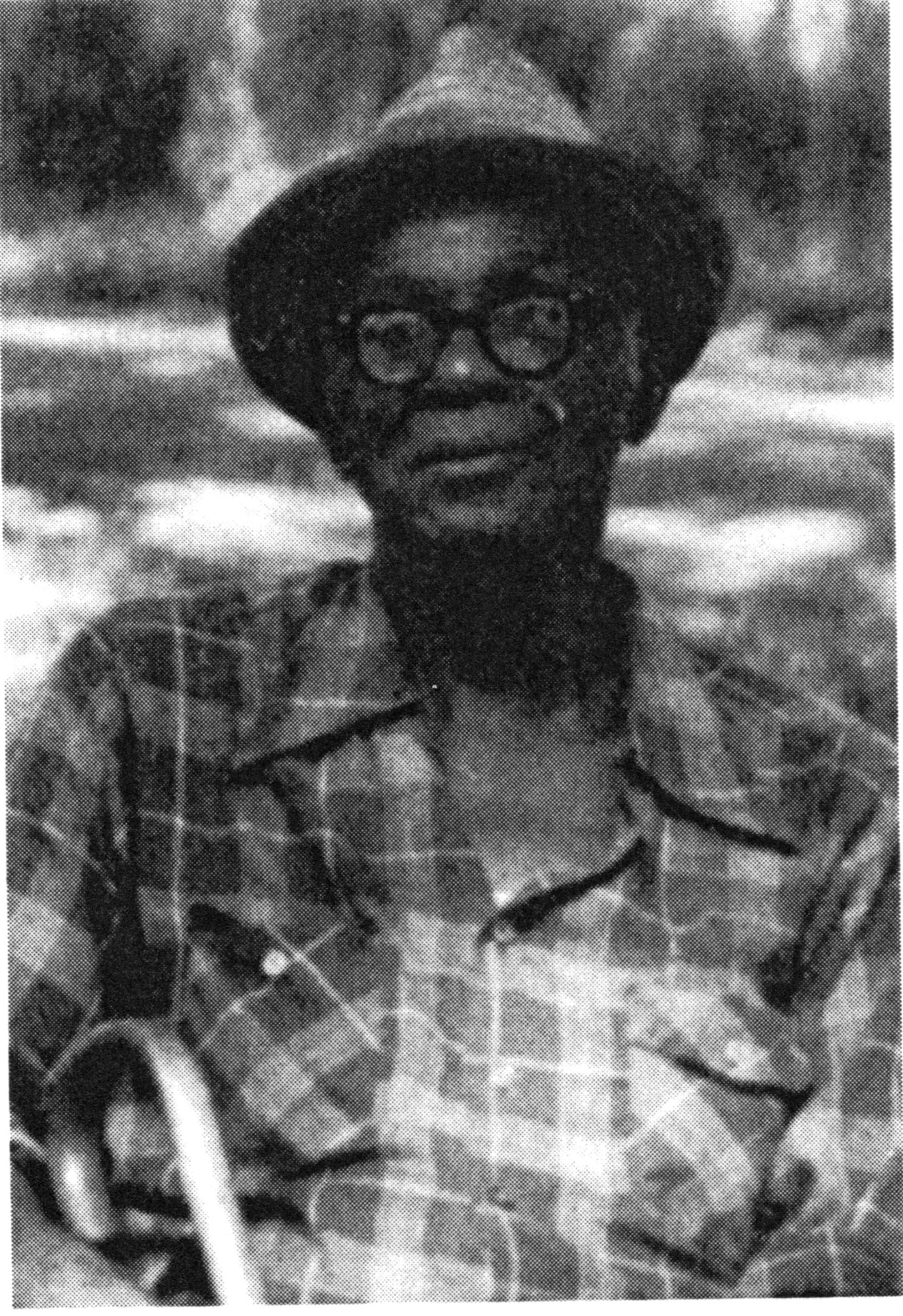
Robert Shephard in his later years (Source: Calvin Ruck, The Black Battalion)

A bachelor throughout his life, Robert was a member of Royal Canadian Legion Branch 34 and 2nd Baptist Church. He passed away at Aberdeen Hospital, New Glasgow, on April 19, 1983, at 90 years of age and was laid to rest in Brookside Cemetery.

23 & 24. Private George William Tarbot and Private Wallace Tarbot:

According to the 1901 Canadian census, George William Tarbot was born at Sand Point, Guysborough County, in July 1884, while his brother Wallace was born at the same location in August 1888. Their parents were James Tarbot, Sand Point, and Mary Jane Benoit (aka Bennett), Arichat. While the family surname was spelled “Tarbot” in older census documents, its spelling gradually transitioned to “Talbot” in the years after the First World War.

James was first married to Annie Campbell, a relationship that resulted in a family of seven children at the time of the 1881 Canadian census. (George later listed James and Annie’s oldest child—his half-brother Frederick—as his next of kin on his military attestation.) George and Wallace were two of at least six children born after James’ marriage to Mary Jane. According to the 1891 and 1901 census records, the family also included Jane (c. 1887), Josephine (c.1889), Louise (c. 1891) and Sarah (c. 1893).

By 1912, Wallace had relocated to New Glasgow, where he worked as a common labourer. On May 12 of that year, he married Elizabeth Blackney, daughter of Gottlieb and Margaret Blackney, in a ceremony held at the United Baptist Church. Four years later, he enlisted with No. 2 Construction Battalion at New Glasgow on July 25, 1916. At the time of his overseas departure, there were three children in the Tarbot household—Fred, age two; Albert, age one; and Leonard, age three months.

Wallace’s brother George enlisted with No. 2 Construction Battalion at Pictou on October 2, 1916. He initially identified his half-brother Frederick Tarbot, Glace Bay, as his next of kin, but later replaced Fred’s name with that of his sister, Mrs. Louise Gregory, Lingan Rd., Sydney. At the time of his enlistment, George was working as “moulder”—a worker who pours molten metal into moulds to produce steel products. George’s occupation and his choices for next of kin suggest that he had been living in Sydney prior to his enlistment.

George and Wallace spent the autumn and winter of 1916-17 training with No. 2 Construction Battalion. While the unit’s headquarters were initially located at Pictou, a move to Truro in September 1916 was no doubt an inconvenience for Wallace, as his family remained in New Glasgow. On March 23, 1917, the brothers departed from Halifax aboard SS Southland and arrived at Liverpool, England, on April 7.

Exactly one month after Wallace arrived overseas—May 7, 1917—his youngest child, five-month-old Leonard, died after contracting measles. Ten days later, Wallace and George crossed the English Channel to France with a large contingent of No. 2 Construction men, destined for service with the Canadian Forestry Corps (CFC) in the Jura District, near the French - Swiss border.

The brothers remained at Jura throughout their time in France. Work in a busy timber harvesting and processing operation could be hazardous at times. On October 6, 1917, Wallace was admitted to CFC Hospital, La Jeux, for treatment of fractured ribs. He spent one month under medical care before returning to duty. One week after Wallace entered hospital, George arrived at the same facility for treatment of a “contusion” to his right hand and was discharged on November 22, 1917.

The winter and spring of 1917-18 passed at Jura without further medical incidents. On July 25, 1918, Wallace was awarded a Good Conduct Badge, having completed two years of military service without a disciplinary infraction. Two days later, George was admitted to hospital for the second time, on this occasion for treatment of “myalgia gen. sev. [general severe].” Considering his age at the time—George was in his mid-30s—it is perhaps not surprising that more than a year of rigorous work in the forestry operation had taken its toll.

On August 16, George was “invalided sick” to the United Kingdom aboard the hospital ship Panama and posted to the Nova Scotia Regimental Depot (NSRD), Bramshott. The following day, he was admitted to Military Hospital, Woking, for medical treatment. In mid-September, George was transferred to the Military Convalescent Hospital, Epsom. He spent another six weeks under medical care before being discharged to NSRD, where he remained for the duration of his time overseas.

Meanwhile, Wallace continued to work alongside CFC personnel in the Jura District. Following the signing of the November 11, 1918 Armistice, CFC Companies ceased cutting timber but processed any harvested logs into lumber. Personnel then began the process of dismantling their sawmills and camps.

No. 2 Construction’s personnel were the first CFC workers to leave France, crossing the English Channel to the United Kingdom on December 14, 1918. George and Wallace were reunited at Bramshott, but followed different paths in returning home.

George departed for Canada aboard SS Aquitania on January 25, 1919, and was discharged from military service at Halifax on February 19, 1919. Military authorities dispatched his British War and Victory service medals to Vale Rd., New Glasgow, on February 25, 1922, suggesting that he was living at that location following his discharge. No further information is available on George’s post-war civilian life or his death.

For reasons that are not explained in his service file, Wallace’s return to Canada was delayed for several months. On January 27, 1919, he was transferred to 2nd CCC [Casualty Clearing Centre], Ripon, the first stage of his journey home. He departed for Canada on May 18, 1919, and arrived at Halifax one week later. Wallace was formally discharged from military service on June 2, 1919, and returned home to New Glasgow.
 
Over the subsequent years, Wallace and Elizabeth had four more children—Lena (1920 - died in infancy), Josephine (1923 - died in infancy), Edna Arvilla (1927 - 2002) and Fred (? - 1977). Wallace worked in the local community as a miner and cement worker until 1946. He passed away at Camp Hill Hospital, Halifax, on July 9, 1949, the result of stomach cancer that had spread to several other organs, and was laid to rest in New Glasgow.