Eight individuals with connections to Guysborough County, Nova Scotia enlisted for service with Canadian Expeditionary Force (CEF) units in April 1917. All but one attested with No. 1 Nova Scotia Forestry Company, which canvassed the province in search of lumbermen interested in working with the Canadian Forestry Corps (CFC) in England and France.
1. Vernon Wilfrid Sponagle (2329339) was born on June 9, 1898, the eldest child of Alfred Lorenzo and Susan A. (Druce) Sponagle, Goldboro, Guysborough County. On April 3, 1917, Vernon was living at Westville, NS at the time of his enlistment with No. 1 Nova Scotia Forestry Company at Truro, NS. No further information is presently available on his military service.
Following his discharge from military service, Vernon returned to Guysborough County. He later married Mabel Marion Kaiser and the couple raised a family of 11 children—six boys and five girls. He passed away at Goldboro on November 30, 1978.
2. Lawrence Archibald Hallett (2329353) was born on February 20, 1898, the eldest child of George and Ada Belle “Bella” (Cook) Hallett, Country Harbour, Guysborough County. Lawrence was working as a fireman in Stellarton, NS when he enlisted with No. 1 Nova Scotia Forestry Company on April 4, 1917.
Lawrence arrived at Liverpool, England on July 5, 1917 and was assigned to the Canadian Forestry Corps’ No. 54 District, near Southampton, on September 1. He was transferred to No. 51 District, Inverness, Scotland on November 21, 1917 and worked with CFC units there for two and a half months.
A pressing need for reinforcements at the front resulted in Lawrence’s transfer to the Canadian Expeditionary Force for infantry service. He was assigned to the 16th Reserve Battalion on February 10, 1918 and was transferred to the 7th Infantry Battalion (British Columbia) on June 6, 1918. Lawrence crossed the English Channel to the Canadian Base Depot at Le Havre, France shortly afterward and was dispatched to the Canadian Corps Reinforcement Camp on July 14, 1918.
Lawrence departed for the 7th Battalion’s camp on August 8—the same day on which the Canadian Corps launched a major attack on the German line east of Amiens, France—but remained behind the lines during the fighting. The battalion’s soldiers withdrew to camp at Warvillers on August 10. Five days later—at approximately 10:00 a.m. August 15—several artillery shells struck the camp, landing “in the area occupied by No. 3 Company [and] wounding several men.”
Lawrence was amongst the wounded, struck in the right hand by a piece of shrapnel. He was immediately evacuated for medical treatment and invalided to England on August 19. While his injuries were minor, affecting only the flexibility of the little finger of his right hand, Lawrence remained in England for well over a year, finally departing for Canada on October 4, 1919. He was discharged from military service at Halifax on October 19, 1919.
Lawrence returned to Country Harbour and later married Lillian May Fenton. The couple subsequently raised a family of two daughters. Lawrence Archibald Hallett passed away at Country Harbour on March 2, 1967 and was laid to rest in Holy Trinity Anglican Church Cemetery, Country Harbour Mines, Guysborough County.
3. Huntley Bartley Hendsbee (2329366) was born at Halfway Cove, Guysborough County on April 3, 1903, the eldest of Silas and Effie Lavina (Snow) Hendsbee’s three children. A second son, Lindsay, died in infancy, while a daughter, Emily Muriel, was born in 1906. Huntley’s mother, Effie, died of consumption [tuberculosis] on September 5, 1909. Silas remarried shortly after her death, and two more children—Horace and Lillian Edna—joined the family in the ensuing months. Sadly, Silas died of tuberculosis on September 27, 1911, leaving his second wife, Clara, to care for four young children.
On April 7, 1917, Huntley enlisted with the No. 1 Nova Scotia Forestry Company at Truro, NS. He was 14 years old at the time, but exaggerated his age on his attestation form by four years. His considerable size may have persuaded military recruiters that he was indeed old enough to enlist—Horace was five feet, six inches tall and weighed 123 pounds at the time of his enlistment.
Huntley departed Halifax on June 22 and arrived at Liverpool, England on July 5, 1917. He and his fellow recruits made their way the the Canadian Forestry Corps (CFC) Headquarters at Sunningdale, where they awaited assignment to a CFC unit. On September 21, Huntley was assigned to No. 75 Company, CFC, and two days later proceeded to France with his new unit.
Recruited in Western Ontario and supplemented with personnel from the No. 1 Nova Scotia Forestry Company, No. 75 Company was assigned to the CFC’s No. 10 District, Marne Group. Its personnel worked alongside three other Companies, harvesting timber in the 3rd French Army Area, near Appilly, France, approximately 120 kilometres northeast of Paris.
Huntley worked in CFC lumber operations for several months before respiratory problems made it impossible for him to continue. He was admitted to hospital at nearby Noyon with a suspected case of tuberculosis, not a surprising development considering the circumstances of his parents’ deaths. Huntley was transferred to No. 7 Canadian General Hospital, Étaples, on December 30. Further diagnosis determined that Huntley was suffering from bronchitis and he was invalided to England on January 7, 1918.
Huntley spent three months in hospital, after which he was discharged to duty. By this time, authorities had discovered his actual age, a fact that eliminated any possibility of returning to France. On April 9, Huntley “slipped [on a board] while returning to [his] hut [from duty].” What first appeared to be a severe ankle sprain was later diagnosed as a fractured fibula. Huntley was once again admitted to hospital at Shorncliffe on April 11. He remained in England throughout the remainder of the year, during which time he was hospitalized on two occasions for treatment of influenza.
On July 4, 1919, Huntley departed England aboard SS Carmania and arrived at Halifax nine days later. He was officially discharged from military service on July 18, 1919. Only 16 years of age at the time, Huntley returned to Crow Harbour, Guysborough County, where he resided with an aunt. Sometime after 1921, Huntley made his way to the west coast and crossed the border into the United States. He spent several years in Washington and Oregon before departing for Australia.
Following several years at Cardiff, New South Wales, he returned to California in 1928 and subsequently married Amelia Brockriede at Los Angeles in 1929. The couple’s eldest child, Huntley Keith, was born at Oakland, CA in 1931. Huntley and Amelia eventually returned to the Whitehead, Guysborough County area, where a second child, Judith Lynn, was born in 1948. Three more children—two boys and a girl—joined the family in subsequent years. Huntley Bartley Hendsbee passed away at Half Island Cove in 1972 and was laid to rest in Bayview Cemetery, Half Island Cove.
4. John William Cumming (2329376) was born at Lower Caledonia, Guysborough County on August 5, 1890, the second of John Alexander and Isabella “Bella” (McQuarrie) Cumming’s four children and their oldest son. A lumberman by occupation, John enlisted with No. 1 Nova Scotia Forestry Company at Truro, NS on April 10, 1917. He departed Nova Scotia aboard SS Justicia on June 25 and arrived at Liverpool, England nine days later. John immediately reported to the Canadian Forestry Corps (CFC) Headquarters at Sunningdale, England.
On September 1, 1917, John was assigned to No. 119, Company, Canadian Forestry (CFC), which was part of No. 53 District, England. The Company initially harvested timber “on the Estate of the late Mrs. Grenville Morgan… and lies about halfway between Slough and Uxbridge on the main road between these places.” The forest located there had been planted by the Second Duke of Marlborough and “was often used by the late Queen Victoria in her drives.”
By June 1918, the Morgan estate’s timber resources had been harvested, prompting the Company relocated to Halton Park Estate, located in the Chiltern Hills, near the Vale of Aylesbury. Personnel established camp at Wendover, Buckinghamshire. The timber harvested at both locations was of poor quality. Due to the trees’ small stature and “twisted” growth, logs had to be cut into short lengths for milling.
With the exception of two brief hospital admissions for minor ailments, John worked with No. 119 Company throughout its time at both locations. The unit returned to CFC’s Sunningdale Headquarters in early May 1919 and John departed for Canada on June 18, 1919. He was formally discharged from military service at Halifax on July 10, 1919.
John returned to Lower Caledonia following the war. Available documents suggest he spent some time in the United States, but later returned to Nova Scotia. John was living at Sunny Brae, Pictou County at the time of his birth registration (November 4, 1940). No further information is available on his later life.
5. Joseph Pelrine (2329402) was born at Larry’s River, Guysborough County on July 19, 1899, the oldest of Thomas and Vinnie Pelrine’s eight children. Joseph enlisted with No. 1 Nova Scotia Forestry Company at Truro, NS on April 14, 1917. No further information is available on his military service. Following his return from overseas, Joseph rejoined his family in New Glasgow, Pictou County, where he worked as an electrician. No further information is available on his later life.
6. George Thomas Greencorn (2329412) was born at Whitehead on April 5, 1899, the fourth of five children in the family of George William and Naomi Spears (Hefferman) Greencorn. George’s father passed away some time before 1911, and Naomi relocated to the Goshen area. A lumberman by trade, George enlisted with No. 1 Nova Scotia Forestry Company at Truro, NS on April 17, 1917. While the surname "Green" appears throughout George's service record, Peggy Feltmate, a Canso area genealogy researcher, indicates that the surname should be "Greencorn."
George departed Halifax on June 25, 1917 aboard SS Justicia and arrived at Liverpool, England nine days later. On August 8, he was assigned to No. 123 Company, one of seven units that operating in District 54, CFC, near Southampton, England. George’s company was “formed for the purpose of doing work in connection with the Royal Flying Corps (RFC) at various aerodromes” and established its initial headquarters at Andover, Hampshire. Its work consisted of “clearing sites, ditching, draining, trimming and felling trees, hauling gravel, levelling, making culverts and drains, earthing, grading, ploughing, scraping, filling depressions, uprooting hedges, residing, cutting pickets, stripping turf, etc..”
On September 16, 1918, No. 123 Company was re-assigned to District 56, CFC and established its headquarters at Reading, England. For the remainder of the year, personnel continued their work constructing aerodromes at locations throughout the Reading area and returned to CFC Headquarters, Sunningdale on January 6, 1919.
On February 25, George departed from Liverpool, England aboard SS Megantic and arrived at Halifax eight days later. He was discharged from military service on March 26, 1919 and returned to his mother’s home in Goshen. He and his mother later relocated to the home of his brother, Lewis, who had settled at East River, Pictou County. The brothers operated a farm there in subsequent years. No further information is available on George’s later life.
7. Peter Arthur McLean Sinclair (2329411) was born on May 4, 1890 at Goshen, Guysborough County, where his parents, William and Mary (Polson) Sinclair, raised a family of nine. Three other sons—Charles Hadden, James Murray [died of sickness related to military service in 1919] and William John Gordon—enlisted with various CEF units during the First World War.
Peter attested with No. 1 Nova Scotia Forestry Company at Truro, NS on April 17, 1917. No further information is available on his military service at this time. Peter returned to Guysborough County following the war, and was residing at Isaac’s Harbour at the time of his September 12, 1931 marriage to Bessie Belle Lintlop, a native of Isaac’s Harbour. The couple later relocated to Pictou County, where Bessie Belle passed away in 1965. The couple had no children.
Peter Arthur McLean Sinclair passed away at Valley View Villa, Riverton, Pictou County in June 1991 an was laid to rest in Abercrombie Cemetery, Pictou County.
8. Harry Forrest MacDonald (1258146) was born at Sherbrooke, Guysborough County on April 19, 1898, the youngest of Henry Cumminger and Emily M. (Smith) MacDonald’s five children. Harry enlisted with No. 10 Siege Battery at Halifax, NS on April 24, 1917 and departed Halifax aboard SS Olympic on June 2, 1917.
Upon landing in England one week later, Harry was assigned to 2nd Reserve Artillery pool. On September 23, he was assigned to the 13th Brigade, Canadian Field Artillery and immediately proceeded to France. Harry joined his new unit in the field on September 29 and served in the forward area for the duration of the war.
Harry returned to England on May 10, 1919 and departed for Canada four days later. He was discharged from military service at Halifax on May 29, 1919. Harry made his way to the United States following the war, working for a time on the west coast before relocating to the New York area. He passed away at Staten Island, New York in May 1985.
Sunday, 30 April 2017


Thursday, 27 April 2017
Remembering Sergeant John Daniel MacDonald—Died of Wounds April 27, 1917
John Daniel MacDonald was born at Arisaig, Antigonish County on April 3, 1884, the fourth of of Donald and Flora MacDonald’s six children. Some time prior to 1911, John Daniel married Margaret Mann, a native of Mulgrave. The couple established residence in the Guysborough County community, where John Daniel worked as a locomotive fireman on the Intercolonial Railway.
On November 2, 1915, John Daniel enlisted with the 85th Battalion at Halifax and spent the winter of 1915-16 training on the Commons with the unit. The formation of the Nova Scotia Highland Brigade in early 1916 led to a significant delay in the unit’s overseas departure, as its personnel spent the summer training alongside their Brigade mates at Camp Aldershot. The four units departed Halifax on October 12, 1916 and arrived in England after a seven-day voyage.
While two of the Brigade’s units were dissolved before year’s end, the 85th remained intact and crossed the English Channel to France on February 10, 1917. The battalion completed introductory tours in the line with experienced units and was assigned to the 4th Division’s 11th Brigade as a “working unit” prior to the Canadian Corps’ scheduled attack on Vimy Ridge, France. Its soldiers were assigned such tasks as carrying supplies to front line units, escorting and guarding the anticipated prisoners of war, and constructing communication trenches in the aftermath of battle.
As the attack progressed during the morning hours of April 9, 1917, 11th Brigade units assigned the task of dislodging German soldiers from Hill 145—the ridge’s highest elevation—suffered significant losses and failed to reach their objective. Concerned that German control of the strategic location might threaten the success of the advance along the remainder of the ridge, military commanders called upon the 85th’s “C” and “D” Companies to complete the task.
At 6:45 p.m., the inexperienced soldiers proceeded up Hill 145 without the protection of an artillery bombardment and successfully secured its western slopes. The following morning, the 85th’s remaining two Companies joined their comrades in the newly established Canadian line atop the ridge. The battalion remained in the trenches for three days as Canadian units consolidated their hold on the strategic location, pushing German forces down its eastern slopes and through the villages below.
In the aftermath of the unit’s withdrawal from the line, John Daniel was promoted to the rank of Acting Sergeant on April 13, a testament to his character and leadership. One week later, the 85th was permanently assigned to the 4th Division’s 12th Brigade and commenced regular tours in the line. On the night of April 24, two of its Companies—one of which included John Daniel—returned to the trenches south of Avion. The following evening, personnel commenced construction of a new section of front line and communication trench.
The morning of April 26 opened with supporting Allied artillery launching a “practice barrage” at 5:15 a.m., in preparation for an attack by 1st and 2nd Division units slated for April 28. The bombardment prompted “very heavy enemy retaliation,” a number of the German shells striking the 85th’s location and inflicting 13 casualties.
John Daniel was among the soldiers wounded during the bombardment. He was evacuated to a nearby field ambulance, where he died from his wounds on April 27, 1917. sergeant John Daniel MacDonald was laid to rest in La Chaudière Military Cemetery, Pas de Calais, France.
Bruce MacDonald's "First World War Honour Roll of Guysborough County, Nova Scotia, Volume I: 1915 - 1917" contains a detailed version of Sgt. John Daniel MacDonald's story, along with profiles of 71 other Guysborough County soldiers and sailors who died during the first three years of the war. The book is available for purchase at bantrypublishing.ca .
 |
| Sgt. John Daniel MacDonald in civilian life. |
While two of the Brigade’s units were dissolved before year’s end, the 85th remained intact and crossed the English Channel to France on February 10, 1917. The battalion completed introductory tours in the line with experienced units and was assigned to the 4th Division’s 11th Brigade as a “working unit” prior to the Canadian Corps’ scheduled attack on Vimy Ridge, France. Its soldiers were assigned such tasks as carrying supplies to front line units, escorting and guarding the anticipated prisoners of war, and constructing communication trenches in the aftermath of battle.
As the attack progressed during the morning hours of April 9, 1917, 11th Brigade units assigned the task of dislodging German soldiers from Hill 145—the ridge’s highest elevation—suffered significant losses and failed to reach their objective. Concerned that German control of the strategic location might threaten the success of the advance along the remainder of the ridge, military commanders called upon the 85th’s “C” and “D” Companies to complete the task.
At 6:45 p.m., the inexperienced soldiers proceeded up Hill 145 without the protection of an artillery bombardment and successfully secured its western slopes. The following morning, the 85th’s remaining two Companies joined their comrades in the newly established Canadian line atop the ridge. The battalion remained in the trenches for three days as Canadian units consolidated their hold on the strategic location, pushing German forces down its eastern slopes and through the villages below.
In the aftermath of the unit’s withdrawal from the line, John Daniel was promoted to the rank of Acting Sergeant on April 13, a testament to his character and leadership. One week later, the 85th was permanently assigned to the 4th Division’s 12th Brigade and commenced regular tours in the line. On the night of April 24, two of its Companies—one of which included John Daniel—returned to the trenches south of Avion. The following evening, personnel commenced construction of a new section of front line and communication trench.
The morning of April 26 opened with supporting Allied artillery launching a “practice barrage” at 5:15 a.m., in preparation for an attack by 1st and 2nd Division units slated for April 28. The bombardment prompted “very heavy enemy retaliation,” a number of the German shells striking the 85th’s location and inflicting 13 casualties.
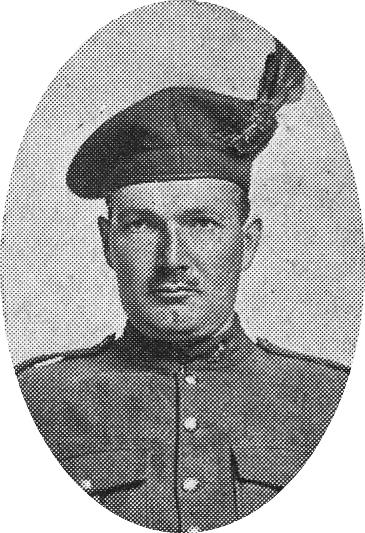 |
| Sgt, John Daniel MacDonald, 85th Battalion. |
Bruce MacDonald's "First World War Honour Roll of Guysborough County, Nova Scotia, Volume I: 1915 - 1917" contains a detailed version of Sgt. John Daniel MacDonald's story, along with profiles of 71 other Guysborough County soldiers and sailors who died during the first three years of the war. The book is available for purchase at bantrypublishing.ca .
Wednesday, 12 April 2017
Remembering CSM Donald Drummond Fraser—Died of Wounds April 12, 1917
Donald Drummond Fraser was born at Sherbrooke, Guysborough County on November 14, 1895. The second of five children in the family of Alfred W. and Christina “Tina” (Murray) Fraser, Donald’s parents were Pictou County natives. The Fraser family was active in mining operations at Goldenville, where Alfred was employed at the time of his 1893 marriage.
Both Donald and his older brother, Alexander Murray, enlisted for overseas service with the 6th Battalion, Canadian Mounted Rifles, at Amherst, NS on March 30, 1915. Donald had commenced training with the unit in early February and earned a promotion to the rank of Corporal prior to his attestation. Six weeks after completing their attestation papers, the siblings were transferred to the 55th Battalion (New Brunswick) and accompanied the unit to Camp Valcartier in mid-June.
Within days of their arrival, military officials assigned the brothers to a reinforcement draft destined for the 1st Battalion (Western Ontario). The draft departed Quebec on June 19 aboard SS Corsican and arrived in England nine days later. Temporarily assigned to the 12th Reserve Battalion, both brothers received promotions in August. Donald advanced to the rank of Lance Sergeant—a Corporal acting in the rank of a Sergeant—and was confirmed in the full rank of Sergeant before months end, while Murray was appointed Lance Corporal.
Officially transferred to the 1st Battalion on August 27, Donald and Murray crossed the English Channel to France the following day and joined the 1st Battalion in the field on September 4, 1915. The 1st was one of the Canadian Expeditionary Force’s most experienced battalions, having crossed the North Atlantic in October 1914 as part of the 1st Canadian Contingent. Assigned to the 1st Division’s 1st Brigade, the unit crossed to France in early February 1915 and entered the trenches of Belgium’s Ypres Salient alongside the 2nd, 3rd and 4th Battalions—all Ontario units—before month’s end.
Throughout the winter and spring of 1915 - 16, Donald and Murray served with the 1st Battalion in the Belgian trenches. Their first introduction to major combat occurred in June 1916 at Mount Sorrel, where Murray was amongst the unit’s fatalities. Donald followed the 1st to the Somme in August 1916 and was promoted to the rank of Company Sergeant Major—his Company’s senior-ranking non-commissioned officer—the following month. He was two months shy of his twenty-first birthday at the time.
While not involved in the Canadian Corps’ major Somme battles, the 1st suffered considerable casualties during its tours near Courcelette and Regina Trench. The unit followed the Corps northward to sectors near Vimy Ridge, where its soldiers served throughout the winter of 1916 - 17. As spring approached, the Canadian units prepared for their assault on Vimy Ridge, scheduled for early April 1917.
The 1st Division occupied the right flank of the Canadian Corps’ line at Vimy, its units having to cover the longest distance to reach the village of Farbus, their final objective. On the morning of April 9, 1917, the 1st Brigade occupied support positions behind the 2nd Brigade, which launched the initial phase of the attack at 5:30 a.m. and secured its first and second objectives within two hours. The 1st, 3rd and 4th Battalions then passed through their lines and advanced toward the village of Farbus and an adjacent wooded area.
By mid-morning, the 1st Battalion had captured its final objective and set about consolidating its position. Personnel remained in the line for two days following the advance, the last of its soldiers retiring during the night of April 12/13. The 1st reported two Officers killed and four wounded during the tour, while 47 of its “other ranks” (OR) were killed, 156 wounded and 26 missing following the battle.
Company Sergeant Major Donald Drummond Fraser was one of the first day’s casualties, “severely wounded by an enemy shell immediately after his Company had reached their objective.” He was evacuated to No. 6 Casualty Clearing Station, where “he succumbed [to his wounds] on April 12, 1917.” Donald was laid to rest in Barlin Communal Cemetery Extension, France.
Detailed summaries of Murray and Donald Fraser’s stories are among the 72 profiles included in First World War Honour Roll of Guysborough County, Nova Scotia, Volume I: 1915 - 1917, available online from Bantry Publishing.
 |
| CSM Donald Drummond Fraser. |
Within days of their arrival, military officials assigned the brothers to a reinforcement draft destined for the 1st Battalion (Western Ontario). The draft departed Quebec on June 19 aboard SS Corsican and arrived in England nine days later. Temporarily assigned to the 12th Reserve Battalion, both brothers received promotions in August. Donald advanced to the rank of Lance Sergeant—a Corporal acting in the rank of a Sergeant—and was confirmed in the full rank of Sergeant before months end, while Murray was appointed Lance Corporal.
Officially transferred to the 1st Battalion on August 27, Donald and Murray crossed the English Channel to France the following day and joined the 1st Battalion in the field on September 4, 1915. The 1st was one of the Canadian Expeditionary Force’s most experienced battalions, having crossed the North Atlantic in October 1914 as part of the 1st Canadian Contingent. Assigned to the 1st Division’s 1st Brigade, the unit crossed to France in early February 1915 and entered the trenches of Belgium’s Ypres Salient alongside the 2nd, 3rd and 4th Battalions—all Ontario units—before month’s end.
Throughout the winter and spring of 1915 - 16, Donald and Murray served with the 1st Battalion in the Belgian trenches. Their first introduction to major combat occurred in June 1916 at Mount Sorrel, where Murray was amongst the unit’s fatalities. Donald followed the 1st to the Somme in August 1916 and was promoted to the rank of Company Sergeant Major—his Company’s senior-ranking non-commissioned officer—the following month. He was two months shy of his twenty-first birthday at the time.
While not involved in the Canadian Corps’ major Somme battles, the 1st suffered considerable casualties during its tours near Courcelette and Regina Trench. The unit followed the Corps northward to sectors near Vimy Ridge, where its soldiers served throughout the winter of 1916 - 17. As spring approached, the Canadian units prepared for their assault on Vimy Ridge, scheduled for early April 1917.
The 1st Division occupied the right flank of the Canadian Corps’ line at Vimy, its units having to cover the longest distance to reach the village of Farbus, their final objective. On the morning of April 9, 1917, the 1st Brigade occupied support positions behind the 2nd Brigade, which launched the initial phase of the attack at 5:30 a.m. and secured its first and second objectives within two hours. The 1st, 3rd and 4th Battalions then passed through their lines and advanced toward the village of Farbus and an adjacent wooded area.
By mid-morning, the 1st Battalion had captured its final objective and set about consolidating its position. Personnel remained in the line for two days following the advance, the last of its soldiers retiring during the night of April 12/13. The 1st reported two Officers killed and four wounded during the tour, while 47 of its “other ranks” (OR) were killed, 156 wounded and 26 missing following the battle.
Company Sergeant Major Donald Drummond Fraser was one of the first day’s casualties, “severely wounded by an enemy shell immediately after his Company had reached their objective.” He was evacuated to No. 6 Casualty Clearing Station, where “he succumbed [to his wounds] on April 12, 1917.” Donald was laid to rest in Barlin Communal Cemetery Extension, France.
 |
| Fraser Memorial stone, Lorne St. Cemetery, New Glasgow, NS. |
Subscribe to:
Comments (Atom)